Are Fire Pits Safe
Are fire pits safe? The short answer is yes, but only if you set them up and use them the right way. Most fire pit accidents happen because someone ignored a basic rule, not because the fire pit itself is dangerous.
The question is really about whether you're willing to follow the safety guidelines that prevent fires, burns, and carbon monoxide poisoning.
Per National Fire Protection Association standards, a recreational fire should be at least 10 feet from any structure and 25 feet from anything flammable. That's not a suggestion. It's the distance that separates a cozy evening from a 911 call.
As of 2026, these guidelines remain the gold standard for residential fire pit safety. Let's break down what actually matters.
Quick Answer
Are fire pits safe? Yes, when used correctly. No, when ignored.
The answer depends on fuel type, placement, and your behavior. Wood pits create sparks and smoke. Gas pits are cleaner but still burn hot.
Both can cause burns or property damage. The safest fire pit is the one you never leave unattended.
Image source: Bing (Web (fair-use with source credit))
Your Fire Pit Is Probably Safe Until It Isn't
Here's the thing about fire pits. Most of the time, they sit there quietly. You roast marshmallows.
You chat. Everyone goes inside happy. That's the 99% of use cases that never make the news.
But that 1% is real. The National Fire Protection Association reports that U.S. fire departments respond to thousands of structure fires and outdoor fires each year caused by recreational fires. Many involve portable fire pits on wooden decks, gas units with faulty connections, or embers that smoldered overnight.
The problem isn't the fire pit itself. It's the gap between what people think is safe and what actually is safe. Most homeowners assume that if a fire pit is sold at a big box store, it's foolproof.
That's not true. The product is safe. The user's behavior determines the outcome.
Think of it like a gas grill. A grill is safe until you use it indoors or leave the propane line leaking. Same logic applies here.
The fire pit is a tool. Tools are only as safe as the person operating them.
Our research shows that the most common factor in fire pit accidents is simple neglect. People walk away. They put it too close to the house.
They don't check the wind. They assume the fire is out when it's still smoldering. Each of these is a preventable mistake.
The key insight is this. Fire pit safety is not complicated. It's about following a handful of rules every single time.
Not most of the time. Every time. That's where people slip.
The Three Real Risks Nobody Talks About Enough
Let's get specific about what can go wrong. Most people worry about the obvious stuff. Catching the house on fire.
Burning a hand. Those are real. But there are three risks that deserve more attention than they get.
Carbon Monoxide Poisoning
Carbon monoxide is invisible, odorless, and deadly. Fire pits produce CO as a byproduct of combustion. In an open, outdoor space, that's usually fine.
The wind disperses it. But if you use a fire pit in a partially enclosed area, under a gazebo, on a screened porch, or near an open window, CO can build up quickly.
The Consumer Product Safety Commission has documented cases of CO poisoning from fire pits used in enclosed or semi-enclosed spaces. Symptoms include headache, dizziness, nausea, and confusion. In high concentrations, it can cause unconsciousness and death within minutes.
Never use a fire pit in a garage, tent, screened porch, or any space with a roof overhead. Even a patio with a solid roof can trap CO. The only safe location is fully open air with good ventilation on all sides.
Property Damage from Heat and Embers
This is the risk that burns down houses. A wood-burning fire pit throws embers. Those embers can travel 20 feet or more in a light breeze.
If they land on dry leaves, wooden deck boards, or nearby vegetation, they can start a fire that spreads to your home.
Gas fire pits don't throw embers, but they radiate intense heat. The heat can warp vinyl siding, melt deck boards, or cause nearby plants to dry out and become combustible. Even a fire pit that's 10 feet from the house can cause damage if the heat is directed toward a flammable surface.
Our research indicates that wooden decks are the most common location for fire pit accidents. A portable fire pit placed directly on a wooden deck without a heat shield or fire-resistant mat can char the boards underneath. Over time, that heat exposure weakens the wood.
One stray ember later, and you have a deck fire.
Burn Injuries in Children and Pets
Burns are the most common fire pit injury. The outer surface of a metal fire pit can reach 500 degrees Fahrenheit or more. Children and pets don't understand that.
They run past, trip, or reach for the flames. The result is serious burns.
The American Burn Association notes that fire pits and campfires are a leading cause of burn injuries in children during summer months. The burns are often on the hands, arms, and face. They can require skin grafts and leave permanent scarring.
The solution is simple. Create a three-foot no-go zone around the fire pit. Use a physical barrier like a ring of chairs, a low fence, or a marked boundary.
Never leave children or pets unsupervised near a lit fire pit. Always extinguish the fire completely before leaving the area.
Fuel Type Changes Everything: Wood vs. Gas vs. Gel
The fuel you choose changes the risk profile significantly. Let's compare the three most common types.
| Fuel Type | Sparks/Embers | Smoke | CO Output | Clearance Needed | Best For |
|---|---|---|---|---|---|
| Wood | High | High | Moderate | 25 ft from flammables | Open yards, camping |
| Propane/Gas | None | Low | Low | 10 ft from structures | Decks, patios, balconies |
| Gel | None | Very low | Low | 10 ft from structures | Small spaces, apartments |
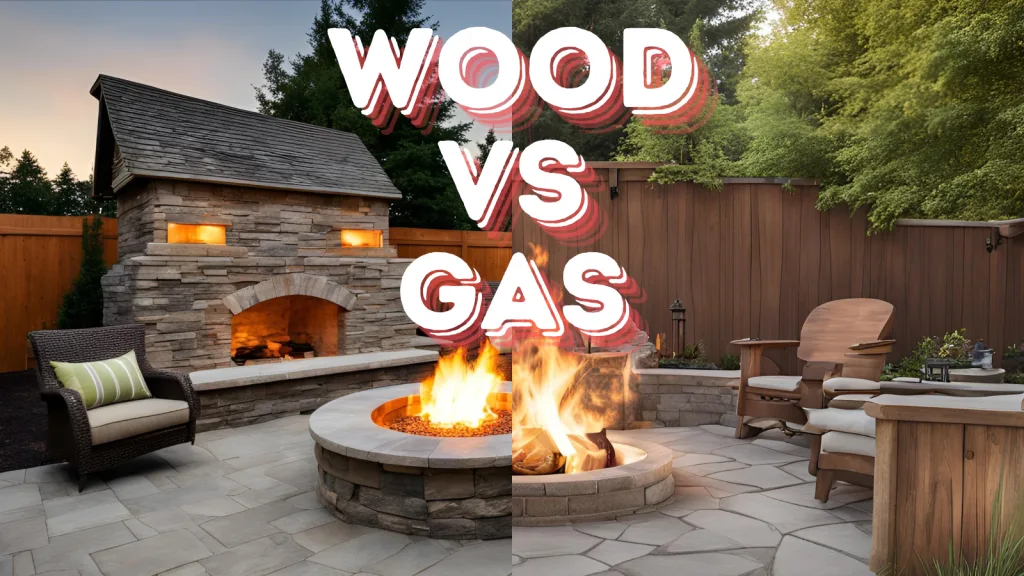
Image source: Bing (Web (fair-use with source credit))
Wood-Burning Fire Pits
Wood fires are the most traditional and the most dangerous. They produce sparks, embers, and significant smoke. The smoke itself contains particulate matter that can aggravate asthma and respiratory conditions.
The embers are unpredictable. A gust of wind can send them flying.
Wood fire pits require the most clearance. The NFPA recommends 25 feet from anything flammable, including your house, trees, sheds, and dry vegetation. That's a lot of space.
If your yard is small, a wood fire pit may not be a safe option.
On the plus side, wood is cheap and readily available. Many people enjoy the crackling sound and the smell. But you need to be vigilant.
Never leave a wood fire unattended. Keep a bucket of water or a garden hose nearby. Let the ashes cool for at least 24 hours before disposing of them.
Propane and Natural Gas Fire Pits
Gas fire pits are cleaner and more predictable. They produce no sparks or embers. The flame is controlled by a valve.
You can turn it off instantly. The heat output is consistent and can be adjusted.
Gas units still require caution. The propane tank and gas lines must be checked for leaks. A leak can cause a gas buildup that ignites explosively.
Always test connections with soapy water before lighting. Never store a propane tank indoors or near heat sources.
Gas fire pits can be placed closer to structures than wood units. The typical recommendation is 10 feet from the house. But check the manufacturer's instructions for your specific model.
Some units require more clearance, especially if they radiate heat in all directions.
If you're looking for a unit that's easy to operate, many top-rated models feature push-button ignition that removes the need for matches or lighters. That's a small convenience that adds real safety.
Gel Fuel Fire Pits
Gel fuel is a relatively new option. It burns cleanly with no smoke or sparks. The cans are portable and easy to replace.
Gel fire pits are popular for apartment balconies and small patios where space is limited.
The downside is that gel fuel burns for a shorter time than propane or wood. A typical can lasts about two to three hours. The heat output is also lower.
Gel fire pits are more for ambiance than for serious warmth.
Safety-wise, gel fuel is one of the safest options. There's no gas line, no propane tank, and no flying embers. But the gel itself is flammable, so you need to handle it carefully.
Never add gel to a burning fire. Allow the can to cool completely before replacing it.
Where You Put It Is the Single Biggest Safety Factor
Location matters more than any other variable. You can have the safest fire pit in the world, but if you put it in the wrong spot, it's a hazard. Let's talk about the specific placement rules.
Clearance from Structures
The NFPA says 10 feet minimum from any structure for gas fire pits. That includes your house, garage, shed, fence, and deck railings. For wood-burning fire pits, the recommendation jumps to 25 feet from anything flammable.
But here's what people miss. The 10-foot rule applies to the fire pit itself, not just the flame. The heat radiating from the sides can be intense.
Vinyl siding can warp at 10 feet. Wooden fences can char. Keep that in mind.
Overhead Hazards
Low-hanging branches, awnings, patio umbrellas, and string lights are all overhead hazards. A fire pit needs at least 10 feet of vertical clearance from anything overhead. That's more than most people think.
If you have a patio with a solid roof, you cannot safely use a fire pit under it. The heat and smoke will accumulate. The CO risk is real.
If the roof is wood, the heat can cause it to ignite over time.
Surface Considerations
The surface under the fire pit matters. Concrete, stone, brick, and gravel are the best options. They don't burn and they don't transfer heat to the ground below.
Wooden decks are the most common surface for fire pit accidents. If you must use a fire pit on a deck, use a fire-resistant mat or a heat shield underneath. The mat should extend at least 18 inches beyond the fire pit on all sides.
Check the manufacturer's instructions to see if the unit is rated for deck use.
Never place a fire pit directly on grass or dry vegetation. The heat can kill the grass, but worse, it can ignite dry leaves or mulch. If you're using a fire pit on grass, clear a 10-foot circle of all vegetation first.
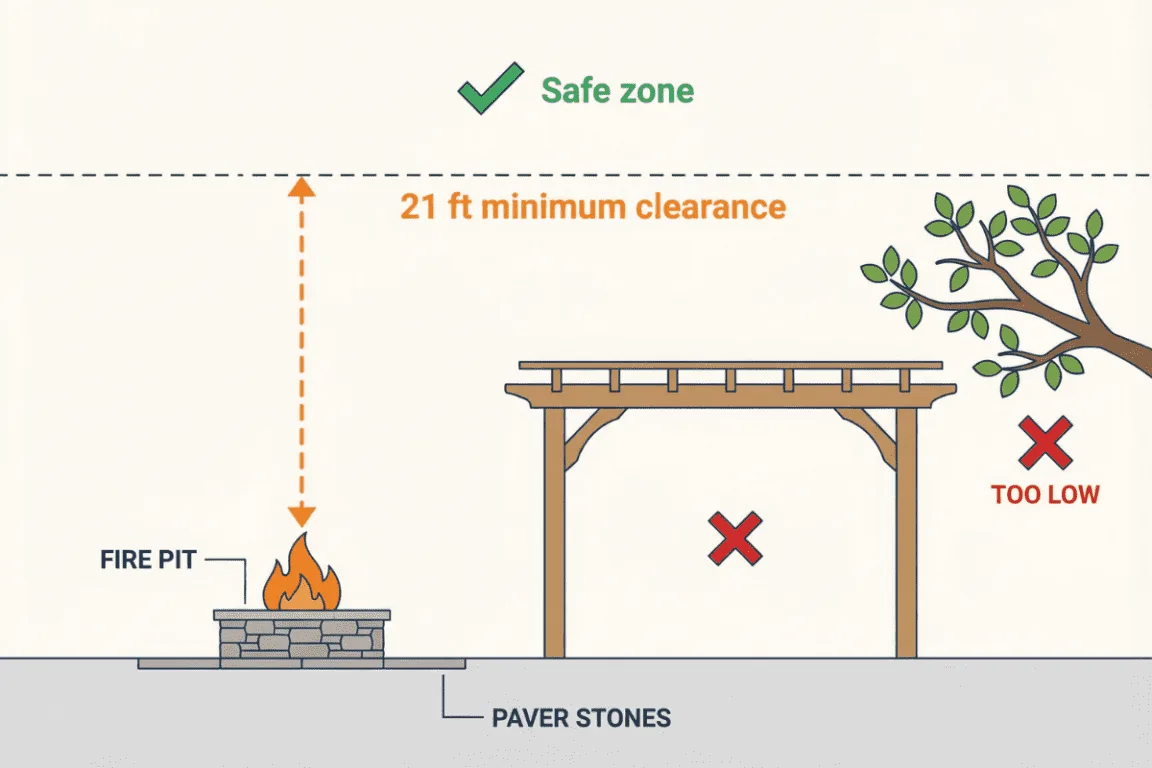
Image source: Bing (Web (fair-use with source credit))
Wind Direction
Wind is the wildcard. A light breeze can turn a controlled fire into a hazard. Embers can blow into dry brush.
Flames can lean toward a wooden fence. The heat can be redirected toward your house.
Before lighting the fire, check the wind direction. Place the fire pit so that the wind is blowing away from structures, seating areas, and vegetation. If the wind is strong enough to make the flames lean significantly, don't light the fire.
It's not worth the risk.
If you're working with a small or exposed patio, some models are designed specifically for tight spaces. We've reviewed the best options for concrete patios that handle wind and heat dispersion well.
The Mistakes That Keep Showing Up in Fire Reports
If you look at fire department reports and insurance claims, the same mistakes appear over and over. These are the errors that turn a safe activity into a dangerous one.
Leaving the Fire Unattended
This is the number one mistake. People go inside to grab another drink, use the bathroom, or answer the phone. They think they'll be back in two minutes.
But two minutes becomes ten. By the time they return, the fire has spread or an ember has landed on something flammable.
A fire pit should never be left unattended while lit. Period. If you need to leave, extinguish the fire first.
It takes 30 seconds to dump water or sand on it. That's worth the inconvenience.
Using Accelerants
Gasoline, lighter fluid, and kerosene are not for fire pits. They burn fast and explode. The vapors can ignite from several feet away.
People have been severely burned by pouring gasoline on a fire that looked dead only to have it flash back.
Use fire starters, kindling, or a propane torch to light wood fires. Never use liquid accelerants. If you're using a gas fire pit, never pour fuel on the burner.
That's how explosions happen.
The "It's Just a Little Wind" Trap
A light breeze seems harmless. But even a 5 mph wind can carry embers 15 feet. A 10 mph wind can carry them 30 feet or more.
If you're in a dry area, that's all it takes to start a wildfire.
The rule is simple. If the wind is strong enough to make the flames lean, don't light the fire. If you're already burning and the wind picks up, extinguish the fire immediately.
Better to have a cold fire pit than a frantic call to 911.
Improper Extinguishing
This is the mistake that causes fires hours later. People think the fire is out because the flames are gone. But the embers can smolder for hours, especially if they're buried in ash.
A gust of wind can rekindle them.
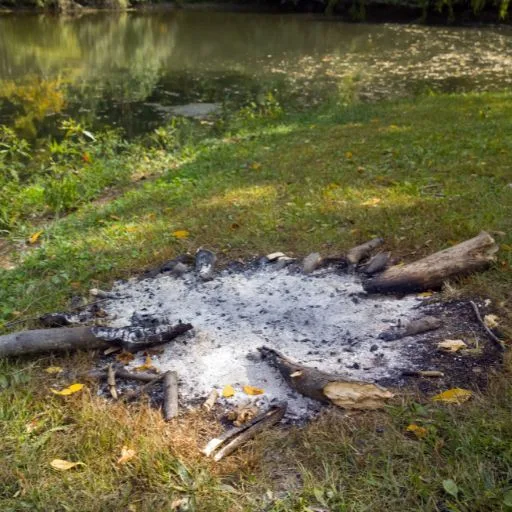
The proper way to extinguish a wood fire is to spread the embers, pour water over them, and stir the ashes. Repeat until there's no steam, no heat, and no glowing embers. For gas fire pits, turn off the tank valve first, then the burner valve.
Let the unit cool completely before covering it.
If you want a fire pit that's simpler to maintain, some models are designed with ash management in mind. We've reviewed the best easy-clean fire pits that make post-fire cleanup faster and safer.
Bringing It Inside
This should go without saying, but it happens every year. People bring a fire pit, a chiminea, or a propane heater indoors because it's cold. The result is carbon monoxide poisoning.
It's one of the most preventable causes of death in the home.
Never use a fire pit indoors. Never use it in a garage, tent, or screened porch. The only safe place is outdoors with open air on all sides.
If you're cold, get a blanket. Don't risk your life.
Legal Stuff That Can Actually Get You in Trouble
Safety isn't just about avoiding burns and fires. There are real legal consequences to ignoring fire pit rules.
Burn Bans
Local authorities issue burn bans during dry conditions. Ignoring them can result in fines starting at $500 in most jurisdictions. Some areas also impose criminal penalties if the ban was violated and a fire started as a result.
Check your local fire department's website or call their non-emergency line before lighting any fire during dry seasons. Burn bans are common in the summer and can last for weeks.
HOA Rules
Homeowners associations have their own rules. Many prohibit wood-burning fire pits entirely. Some allow gas units with specific size limits or placement requirements.
Always check your HOA covenants before purchasing a fire pit.
The fine for violating HOA rules can be steep. Some HOAs can also force you to remove the fire pit at your own expense. Don't assume it's allowed just because your neighbors have one.
Apartment and Condo Restrictions
Apartment buildings and condos have their own restrictions. Most prohibit wood-burning fire pits on balconies. Some allow gel fuel or propane units with a minimum distance from the building.
Check with your building management first.
If you're looking for a unit that's more likely to be apartment-friendly, smaller gas models tend to pass balcony rules more easily. We've covered the best options for year-round use that work in compact outdoor spaces.
Insurance Implications
Your homeowner's insurance may require a fire pit that meets certain safety standards. Some policies exclude coverage for damage caused by fire pits. Call your agent and ask.
It's better to know before you need to file a claim.
If you rent out your property, fire pits can be a liability. Some landlords prohibit them entirely. Others require specific safety equipment.
Check your policy and your lease agreement.
Fire Pit Safety FAQ
Can I put a fire pit on a wooden deck?
Yes, but only with precautions. Use a fire-resistant mat rated for high heat. Ensure the fire pit is at least 10 feet from the house.
Check the manufacturer's instructions for deck use. Never leave it unattended.
Is it safe to use a fire pit on a balcony?
It depends on your building's rules and the fire pit type. Gel fuel and propane units are typically allowed on balconies. Wood-burning units are almost never allowed.
Maintain at least 10 feet of clearance from the building.
How far should a fire pit be from the house?
Gas fire pits need at least 10 feet from any structure. Wood-burning fire pits need at least 25 feet from anything flammable. Check your local codes for specific requirements.
Are fire pits safe around kids and pets?
Only with supervision. Create a three-foot no-go zone around the fire pit. Never leave children or pets unattended near a lit fire.
The outer surface of the fire pit can reach 500 degrees Fahrenheit.
Do I need a permit for a fire pit?
Some jurisdictions require permits for permanent fire pits. Portable fire pits typically don't need permits. Check with your local fire department or building department before installing a permanent unit.
Your Safety Check: The Real Bottom Line
Here's a simple checklist. If you can answer yes to all of these, your fire pit setup is likely safe.
- Is the fire pit at least 10 feet from any structure (25 feet for wood)?
- Is the surface under the fire pit non-combustible?
- Is there no overhead hazard within 10 feet?
- Do you have a fire extinguisher or water source nearby?
- Are children and pets supervised when the fire is lit?
- Do you extinguish the fire completely before leaving?
If you answered no to any of these, make changes before your next fire. If you can't meet the clearance requirements, consider a gas fire pit instead of wood. If you can't meet any of them, a fire pit may not be safe for your space.
If you're still unsure about which type to choose, we've covered the best budget-friendly fire pits that balance cost with safety features. A well-chosen unit is the first step toward safe use.
The bottom line is simple. Fire pits are safe when you respect them. They're not toys.
They're not decorations. They're fire. Treat them like it, and you'll be fine.