
Can You Use a Fire Pit Under a Covered Patio
The question of whether you can use a fire pit under a covered patio is one of those rare topics where the wrong answer can put your life at risk. It's not about preference or aesthetics. It's about physics, chemistry, and fire code.
The International Fire Code requires open-flame devices to maintain clearances that many covered patios simply don't meet. Most structure fires involving outdoor fire pits trace back to improper placement under an overhang. Let's walk through the conditions that actually matter so you can make a safe, informed call.
Quick Answer
You can use a gas fire pit under a covered patio if specific conditions are met. Wood fires are almost always unsafe under cover. You need at least 7 feet of vertical clearance.
Three sides must be open for ventilation. And you must have a working CO detector nearby.
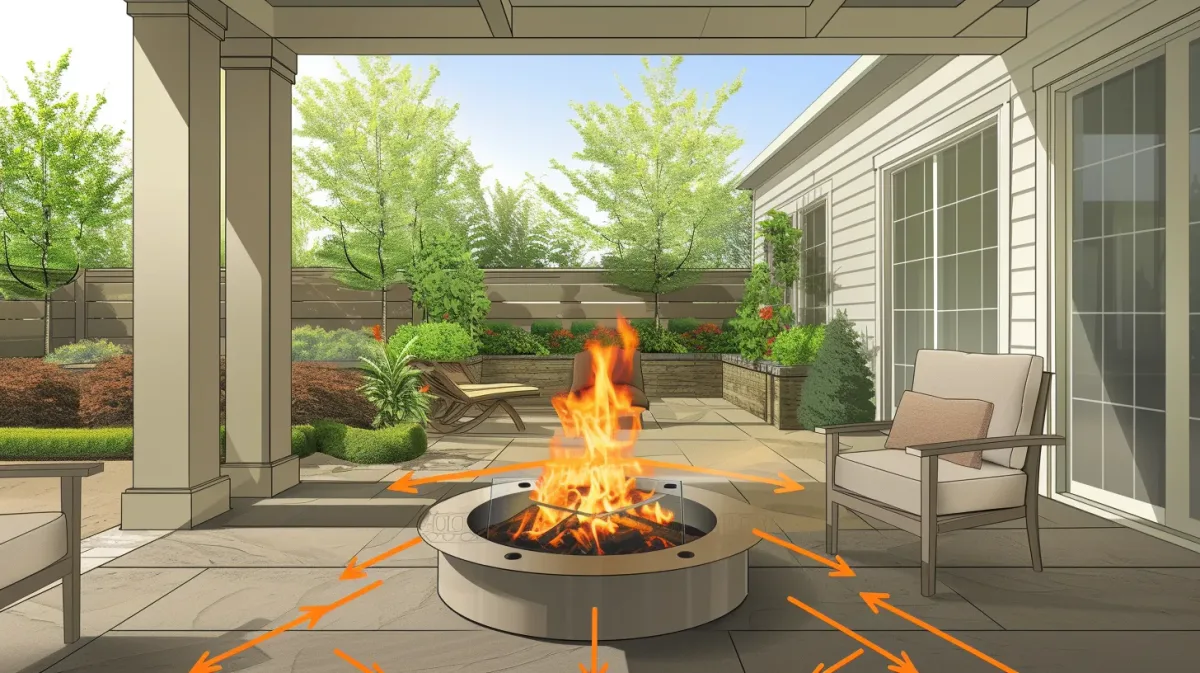
Image source: Bing (Web (fair-use with source credit))
Why This Isn't a Simple Yes or No: The Physics of Fire and Roofs
Fire behaves differently when it's trapped. In an open backyard, heat and smoke rise and disperse freely. Under a covered patio, that same column of hot air hits your ceiling, spreads sideways, and looks for the nearest escape route.
That changes everything.
The key variable is ceiling height. The International Fire Code requires open-flame devices to have at least 7 feet of clearance above the burner. Many manufacturers recommend 10 feet or more for gas units.
Wood-burning fire pits often require 15 feet. That's taller than most residential patios.
Then there's the roof material. A metal roof sheds heat differently than wood, drywall, or polycarbonate. Combustible materials like cedar, pine, or ceiling-mounted fans can ignite well before the flames reach them.
Infrared heat doesn't care about flame height. It radiates upward and can char a ceiling from 4 feet away.
Ventilation matters just as much. If your patio is enclosed on three or four sides, smoke and carbon monoxide have nowhere to go. Even with a ceiling fan, you're just recirculating toxic air.
The IFC requires that at least 40% of the perimeter be open for natural ventilation when an open flame is present.
The short version? A low ceiling, combustible cover, and poor ventilation create a triangle of risk. Change any one variable, and the answer shifts.
The Real Risks: CO Poisoning, Fire, Smoke Damage, and Your Insurance
Let's start with the one that kills silently. Carbon monoxide from a fire pit under a covered patio accumulates faster than most people realize. A propane fire pit burning for 30 minutes in a semi-enclosed area can produce CO levels above 200 parts per million.
The CPSC warns that prolonged exposure above 50 ppm causes headaches and dizziness. Above 150 ppm, disorientation and loss of consciousness can occur within two hours.
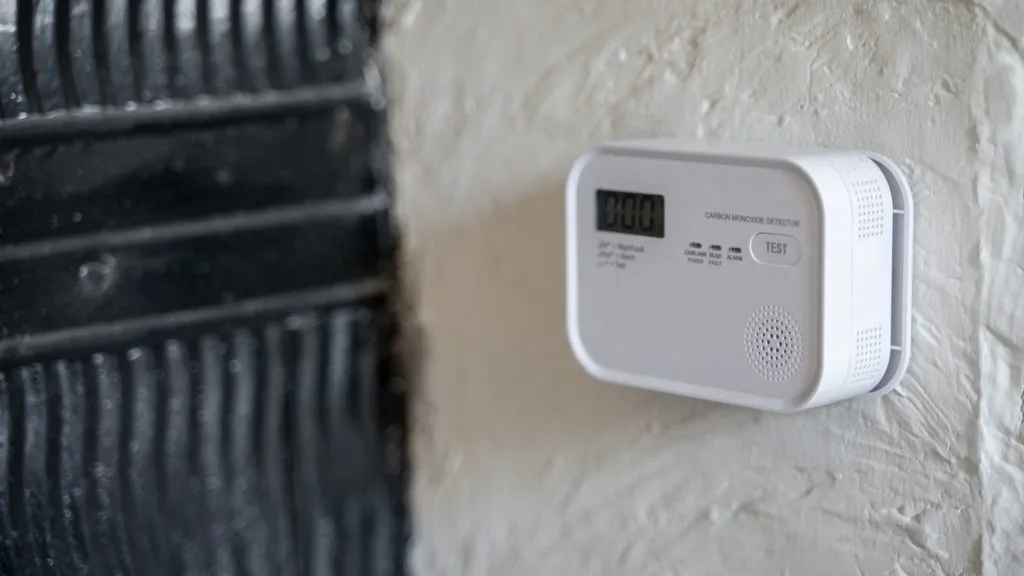
Image source: Bing (Web (fair-use with source credit))
Fire risk is the obvious one, but it's not just about the flames touching the roof. Radiant heat can soften drywall compound, warp PVC trim, or melt patio furniture. Embers from a wood fire can float up and land on a dry gutter or wooden beam.
The NFPA reports that nearly half of all outdoor fire pit fires spread to the structure itself.
Smoke damage is the hidden cost. Even if nothing catches fire, soot and creosote from wood smoke stain ceilings and fabric. That yellow-brown residue is acidic and eats into paint and upholstery over time.
Cleaning it off a textured ceiling is a nightmare.
Then there's your homeowner's insurance. Most policies have exclusions for damage caused by open flames under a roof. If a fire starts under your covered patio and spreads, your insurer may deny the claim.
They'll argue it was a foreseeable hazard. And they'd be right.
The 5 Safety Checks You Must Make Before Lighting a Single Match
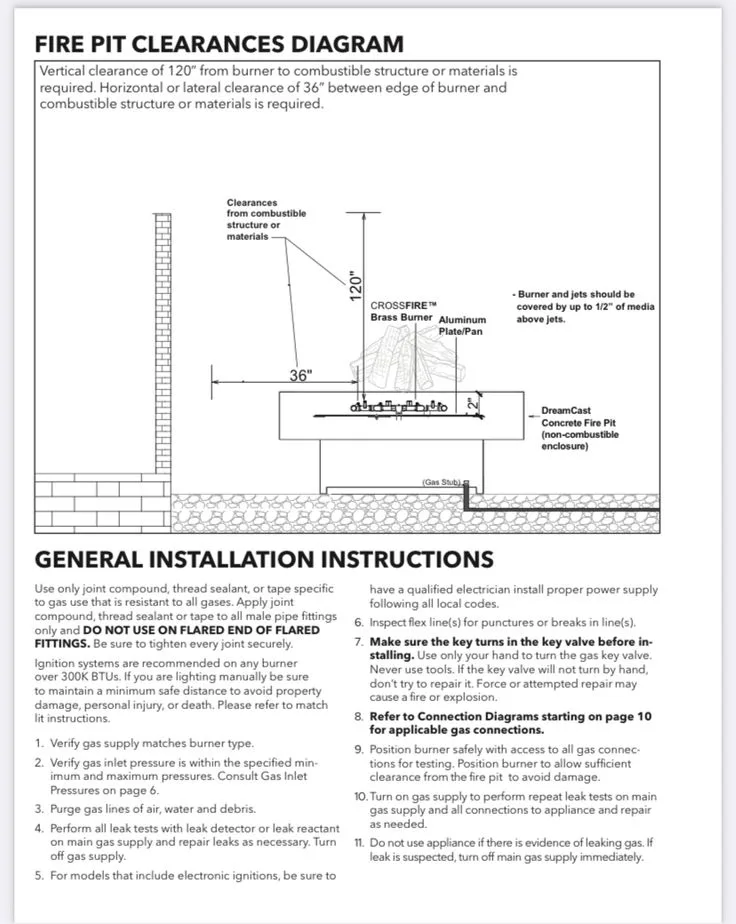
Image source: Bing (Web (fair-use with source credit))
These aren't suggestions. They're the minimum bar for even considering a fire pit under a covered patio. Run through every one before you press that ignition button.
| Safety Check | What to Look For | Why It Matters |
|---|---|---|
| Ceiling clearance | At least 7 ft for gas, 10 ft preferred | Heat rises vertically; low clearance chars or ignites the roof |
| Roof material | Non-combustible only (metal, concrete, tile) | Wood, drywall, and PVC can ignite from radiant heat alone |
| Side ventilation | At least 3 open sides, 40% perimeter open | Traps CO and smoke in enclosed spaces |
| CO detector | Working unit within 15 ft of fire pit | Only reliable warning before symptoms hit |
| Fire extinguisher | 5-lb ABC rated, within reach, not expired | Seconds matter if embers land on combustibles |
Measure the ceiling height from the floor to the lowest point of the roof. That's your clearance. If it's under 7 feet, stop.
A gas fire pit with a 2-foot flame leaves you only 5 feet of buffer. The heat plume alone can exceed that.
Check the roof material with a magnet. If it sticks, you're dealing with metal. If it doesn't, you might have wood, drywall, or composite.
Look for a fire rating stamp on the underside. Class A is best. Class C means it can catch fire from a moderate heat source.
Walk around the perimeter. Count the open sides. If fewer than three are open, you have a CO trap.
That's not negotiable.
Install a CO detector at breathing height, about 5 feet off the ground, within 15 feet of the fire pit. Test it before each use. Change the batteries twice a year.
Keep a 5-pound ABC fire extinguisher within arm's reach. Check the gauge monthly. If the needle is in the red, replace it.
When You Absolutely Should Not Use a Fire Pit Under Cover
Some situations are hard no's. No amount of caution changes the physics.
If your patio cover is made of wood, drywall, or any combustible material, don't do it. The radiant heat from a fire pit can reach 400°F at the ceiling level. Wood ignites at around 500°F.
That's a 100-degree margin. A gust of wind or a high flame pushes it over the edge.
If the ceiling height is under 7 feet, don't even think about it. Even a tabletop fire pit with a 6-inch flame creates a heat plume that rises 2 to 3 feet above the burner. A 7-foot ceiling leaves you with 4.5 feet of clearance.
Anything less is a hard stop.
If your patio is enclosed on three or four sides, you're creating a carbon monoxide chamber. It doesn't matter if you crack a window or leave the door open. CO is slightly lighter than air and mixes evenly in a room.
It fills the space from top to bottom.
If you live in a wildfire-prone area, local fire codes often ban open flames under any permanent structure. California, Colorado, and parts of Australia have strict rules. Check with your local fire marshal before buying anything.
If you have an HOA, read the bylaws. Many explicitly prohibit fire pits under covered patios. Violating the rule can mean fines or forced removal.
And if you have children or pets who will be near the fire pit, reconsider. The burn risk under a low ceiling is higher because the heat reflects back down. Kids and dogs don't understand the danger zone.
What to Use Instead — Safer Options for Warmth and Ambiance
If your patio fails the safety checks, you don't have to give up on outdoor comfort. Several alternatives keep you warm without the risks of an open flame under a roof.
Electric fire pits are the safest choice for covered patios. They produce heat and realistic flame effects but zero emissions. No ventilation needed.
No clearance worries. Just plug it in. Most electric units are safe under any non-combustible cover.
Patio heaters are another reliable option. Propane and electric models heat the air directly without an open flame. Look for units with a tip-over shutoff and an oxygen depletion sensor.
They're designed for outdoor use under cover.
Chimineas offer a compromise. They contain the fire and direct smoke upward. But they still need at least 10 feet of clearance and three open sides.
They're safer than a traditional fire pit but not risk-free.
For pure ambiance, tabletop ethanol fire pits burn cleanly with no smoke. But they still produce carbon monoxide. You need ventilation and a working CO detector.
If you decide to use a real fire pit in an open area, consider a model designed for durability and low maintenance. Some of the best fire pit for year-round use options handle rain, wind, and temperature swings without rusting.
For safety guidelines, refer to the NFPA 1 fire code for open-flame devices.
Common Mistakes That Get People in Trouble
Even careful homeowners make these errors. Here are the most common ones.
Assuming a gas fire pit is completely safe under a covered patio. Gas is safer than wood, but it still produces CO and radiant heat. You still need clearance and ventilation. Don't skip the checks.
Ignoring the ceiling material. Many people assume that if the fire doesn't touch the roof, it's fine. But radiant heat can ignite drywall and wood. Always check the fire rating of your ceiling.
Using a wood fire pit under any cover. Wood fires produce embers, smoke, and creosote. They require 15 feet of clearance. Most covered patios can't meet that.
Not installing a CO detector. Some people think they'll smell gas or feel sick before it's dangerous. But CO is odorless and colorless. By the time you feel symptoms, you're already in trouble.
Forgetting about the sides. Even if your ceiling is high and your roof is metal, you need at least three open sides for ventilation. Enclosed patios trap CO and smoke.
If you're looking for a fire pit that works well in open areas, look for a low-smoke model that reduces soot and keeps the air cleaner.
Frequently Asked Questions
What is the minimum ceiling height for a gas fire pit under a covered patio?
The International Fire Code requires at least 7 feet of clearance above the burner. Many manufacturers recommend 10 feet for safety. Measure from the burner to the lowest point of the roof.
Can I use a propane fire pit on a covered balcony?
It depends on your building code and landlord rules. Most balconies are enclosed on two or three sides, which traps CO. Check with your building manager and local fire marshal before lighting anything.
Do I need a permit to install a fire pit under a covered patio?
Yes, in most jurisdictions. Any permanent gas line installation requires a permit. Even portable units may need approval if used under a permanent structure.
Contact your local building department.
What does the fire marshal think about fire pits under covered patios?
Most fire marshals advise against them. They follow the NFPA and IFC codes, which restrict open flames under any roof. If you want a definitive answer, request a site visit from your local fire marshal.
Final Verdict: Can You? Should You?
So, can you use a fire pit under a covered patio? Yes, but only under strict conditions. You need a gas fire pit, a ceiling height of at least 7 feet, a non-combustible roof, three open sides, and a working CO detector.
Should you? That's a different question.
Even if you meet all the conditions, the risks remain. CO poisoning, fire damage, and insurance issues are real. Our research shows that most homeowners don't realize the danger until it's too late.
If you can, move the fire pit to an open area. Use a patio heater or electric fire pit under the cover instead. The ambiance isn't worth the risk.
If you're set on a fire pit, choose a model designed for safety. Look for easy-to-use fire pits with automatic shutoff features. And always follow the manufacturer's instructions.
Remember, no amount of convenience is worth a house fire or a trip to the ER. Make the safe choice.