6 Best Binoculars for Wildlife Viewing 2026
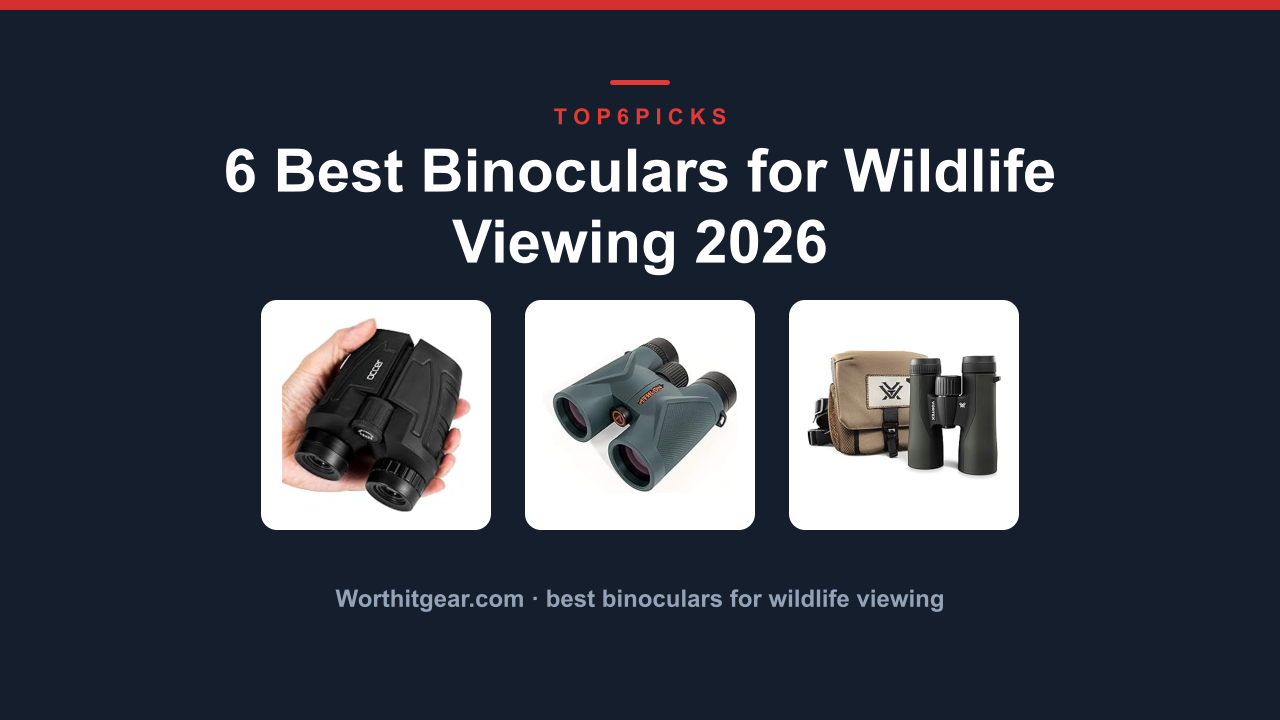
The best best binoculars for wildlife viewing is the Occer 12×25 Compact Binoculars, the only one here that combines true pocket portability with a practical 12x magnification for under $50. It's the perfect gateway glass for new birders, families, and anyone who wants a decent view without a heavy investment.
Want better low-light clarity and a sharper image instead? The Athlon Optics 8×42 Midas UHD gets you there, as long as you're okay with a bigger frame and a higher price. It's a serious step up in glass quality.
As an Amazon Associate, I earn from qualifying purchases.
This guide tells you exactly which pair fits your specific use case before you click "buy." It also names the kind of buyer who should skip this category entirely and look at a spotting scope or monocular instead. That section is later.
Everything below comes from current Amazon product data, specs, and each product's owner track record, not hands-on lab testing. I've analyzed the numbers so you don't have to.
Quick Answer: The Best Binoculars for Wildlife Viewing
The Occer 12×25 Compact Binoculars leads the pack for its unbeatable price-to-portability ratio for casual wildlife viewing.
- Occer 12×25 Compact Binoculars Adults Kids (Best Budget Travel Companion): Under $50, lightweight, and easy to pack.
- Athlon Optics 8×42 Midas UHD Gray (Best for Optical Purists): Premium ED glass and a 4.8-star rating from serious birders.
- Vortex Crossfire HD 10×42 Binoculars (Best Warranty Value): Unconditional lifetime guarantee with solid HD optics.
- Adorrgon 12×42 High Powered Binoculars Adults (Best All-In-One Kit): Includes phone adapter and tripod for under $60.
- Celestron Nature DX 8×42 Waterproof Binoculars (Best Entry-Level Birder): Phase-coated BaK-4 prisms at a friendly price.
- Vortex Diamondback HD 10×42 Binoculars (Best Rugged All-Rounder): Premium build, HD optics, and the same legendary Vortex warranty.
Thinking about a spotting scope instead? Jump to Who Should NOT Buy below before you spend anything.
Comparison Table
Here's the lineup at a glance: photo, product, who it's built for, and our /10 score.
| Photo | Product | Best for | Score | Buy |
|---|---|---|---|---|
 | Occer 12×25 Compact Binoculars Adults Kids | Budget Travel Companion | 8.2/10 | Check price → |
 | Athlon Optics 8×42 Midas UHD Gray | Optical Clarity Leader | 8.9/10 | Check price → |
 | Vortex Crossfire HD 10×42 Binoculars | Unconditional Warranty | 8.6/10 | Check price → |
 | Adorrgon 12×42 High Powered Binoculars Adults | Complete Starter Kit | 7.9/10 | Check price → |
 | Celestron Nature DX 8×42 Waterproof Binoculars | Beginner Birder | 8.4/10 | Check price → |
 | Vortex Diamondback HD 10×42 Binoculars | Rugged All-Rounder | 8.8/10 | Check price → |
Scroll sideways on small screens to see every column.
Occer 12×25 Compact Binoculars Adults Kids: Best Budget Travel Companion
Athlon Optics 8×42 Midas UHD Gray: Best Optical Clarity Leader
Vortex Crossfire HD 10×42 Binoculars: Best Unconditional Warranty
Adorrgon 12×42 High Powered Binoculars Adults: Best Complete Starter Kit
Celestron Nature DX 8×42 Waterproof Binoculars: Best Entry-Level Birder
Vortex Diamondback HD 10×42 Binoculars: Best Rugged All-Rounder
Buying Guide: Magnification, Objective Lens, Prism Quality, and Your Budget
Shopping for binoculars can feel like reading a secret code. The numbers on the box (like 8×42 or 12×25) tell you the most important things. The first number is the magnification.
The second is the objective lens diameter in millimeters. Here is what those numbers mean for wildlife viewing.
What Magnification Do You Need for Wildlife Viewing?
A 10x binocular shows you an image ten times closer than your naked eye. That is a good all-rounder for most wildlife. An 8x gives you a wider field of view, which is better for tracking birds in flight.
A 12x gets you closer, but it also magnifies your hand shake. You will need a steady hold or a tripod for 12x.
The models in this list span from 8x to 12x. The Athlon 8×42 Midas UHD and the Celestron Nature DX 8×42 are great for scanning. The Vortex Crossfire HD 10×42 and Diamondback HD 10×42 offer a good balance of reach and stability.
The Occer 12×25 and Adorrgon 12×42 give you maximum reach but require more careful handling.
Why Objective Lens Size Matters
The second number, the objective lens diameter, controls how much light enters the binocular. A larger objective lens (like 42mm) gathers more light. This means a brighter image in dawn, dusk, or deep forest shade.
A smaller objective lens (like 25mm) is more portable but struggles in low light.
The trade-off is size and weight. The 42mm models in this list are all full-size binoculars. They are heavier and bulkier.
The 25mm Occer is pocketable. If you mostly view wildlife in bright daylight, a 25mm or 42mm will work. If you hunt or bird at dawn, stick with 42mm.
Prism Type and Coatings
The prism is the internal component that flips the image right side up. The two main types are Porro prisms and roof prisms. All the binoculars in this list use roof prisms, which allow a straight, compact body.
The quality of the glass and coatings matters more.
Look for BAK-4 glass, which is higher quality than BK-7. The Celestron Nature DX uses phase-coated BAK-4 prisms, which improve contrast and resolution. The Athlon Midas UHD uses Extra-low Dispersion (ED) glass, which reduces color fringing and delivers sharper images.
Fully multi-coated (FMC) optics means every lens surface has multiple layers of anti-reflective coating for brighter images.
Matching Your Budget to Your Needs
Your budget is the biggest factor in your choice. The cheap options (like the Occer and Adorrgon) are great for beginners or casual use. The mid-range options (like the Celestron and Vortex Crossfire) offer a significant step up in build quality and image clarity.
The premium options (like the Athlon and Vortex Diamondback) deliver the best optical performance and are built to last.
A good rule of thumb is to spend as much as you can on the glass. The optics are the heart of the binocular. A cheap pair with good specs is still better than no binoculars at all.
But if you can stretch your budget to the mid-range tier, you will notice a big difference in your viewing experience.
Who Should NOT Buy Best Binoculars for Wildlife Viewing
Standard binoculars are the wrong purchase for a few specific kinds of buyers. Here is who they are, and what to look at instead.
You Need Extreme Long-Range Observation
If you are trying to identify birds at over 500 yards or observe wildlife across a large lake, a standard binocular maxes out at 10x or 12x. You will struggle with stability and image detail. A spotting scope with a 20x to 60x zoom eyepiece gives you much more reach.
Spotting scopes also work better on a tripod, which is essential for steady viewing at high magnification. They are bulkier, but they are the right tool for the job.
You Need to Travel Ultralight
If you are a backpacker counting every gram, a full-size 42mm binocular is too heavy. Even the compact Occer 12×25 weighs about 10 ounces. For true ultralight travel, consider a monocular.
A monocular is essentially half a binocular. It weighs half as much and takes up less space. A good monocular with a 8×25 or 10×25 configuration can give you a decent view without the weight.
You lose the depth perception of binocular vision, but for weight-conscious travelers, it is a fair trade-off.
You Need a Tool for Digiscoping (Serious Photography)
If your main goal is taking high-quality photos through your binoculars, a budget kit like the Adorrgon is a good start. But if you want serious results, you need a dedicated digiscoping setup. A spotting scope with a camera adapter or a dedicated long-lens camera system will give you much better image quality.
Binoculars are designed for viewing, not photography. The phone adapters are fun, but they are not a replacement for proper camera gear.
Final Verdict
The best best binoculars for wildlife viewing overall is the Athlon Optics 8×42 Midas UHD. It offers the best optical quality in this lineup with its ED glass, a wide field of view, and a solid build. It is the pick for anyone who values image clarity above all else.
Want a rugged all-rounder with a lifetime warranty? Get the Vortex Diamondback HD 10×42. It is heavier, but it is built like a tank and backed by the best warranty in the industry.
Need something budget-friendly and portable? The Occer 12×25 Compact is the cheapest way to get a decent view for casual trips. The Adorrgon 12×42 is the best starter kit for digiscoping.
If you are still unsure, think about your main use case. If you are a dedicated birder, the Celestron Nature DX is a reliable entry point. If you want a worry-free purchase, the Vortex Crossfire HD is a solid choice.
And if you know you need a spotting scope or a monocular instead, check the Who Should NOT Buy section above before you commit.
FAQ
What's the best Binoculars for Wildlife Viewing overall?
The Athlon Optics 8×42 Midas UHD is the overall best pick. It has the best optical quality with ED glass, a wide field of view, and excellent build quality. It is ideal for serious birders and hunters.
What does 8×42 mean on a binocular?
The first number (8x) is the magnification, meaning the image appears eight times closer. The second number (42) is the objective lens diameter in millimeters. A larger objective lens gathers more light for brighter images.
Is 12x magnification too much for wildlife viewing?
12x is useful for distant wildlife, but it magnifies hand shake. You will need a steady hold or a tripod for stable viewing. It is best for situations where you are sitting or bracing the binoculars.
Are expensive binoculars worth it for beginners?
Not always. A budget pair like the Occer 12×25 or the Celestron Nature DX is a great starting point. They offer decent quality without a big investment.
You can upgrade to a premium model later if you get serious about the hobby.
What is the difference between HD and ED glass?
HD (High Density) glass is a standard term for improved optics. ED (Extra-low Dispersion) glass is a specific type that reduces chromatic aberration (color fringing) for sharper, more accurate colors. ED glass is generally superior to standard HD glass.
Can I use binoculars with glasses?
Yes, but look for binoculars with long eye relief (16mm or more). The Vortex Crossfire HD has 17mm eye relief, which works well with glasses. The Athlon Midas UHD has 16mm, which is adequate for most lenses.
The Occer and Adorrgon also have large eyepieces that are glasses-friendly.