Best Ice Fishing Shelter: Top Picks For Warmth
The best ice fishing shelter combines warmth, room, wind control, and quick setup for safer winter days.
A cold lake can turn a fun trip into a hard test when wind cuts through your coat and snow fills your gear. I have learned that a good ice fishing shelter acts like a small base camp. It blocks wind, holds heat, and gives anglers room to move without bumping every rod. The right ice shanty also helps protect electronics, bait, food, and hands from harsh weather. Below, I compare seven popular options and explain which shelter fits solo anglers, families, and large fishing groups.

ActiveTrail Ice Fishing Tent Insulated…
EASY POP-UP HUB SETUP: Hub-style pop-up ice fishing shelter—1 person can set up and take down this ice fishing tent in under 60 seconds. Packs into a carry bag for…

VEVOR Pop Up Ice Fishing…
Insulated and Weatherproof: This portable ice fishing shelter is crafted from 600D high-density weather-resistant Oxford fabric, filled with 80g fluffy warm cotton to keep you warm and comfortable even in…

Eskimo Outbreak 650XD Pop-up Portable…
OVERSIZED, TRIP-PROOF DOOR: The Outbreak 650XD features an oversized, trip proof door that fully zips down to the ice. This means no more catching your foot on the door framework…
ActiveTrail Insulated Ice Fishing Tent

The ActiveTrail ice fishing tent is built for anglers who need a large, warm place to fish with friends or family. Its hub-style frame makes setup much faster than building a shelter pole by pole. The listed size measures 11.6 by 6.5 by 6 feet, so most users should have useful standing and moving space inside. Its rated capacity of six to eight people makes it one of the roomier shelters in this comparison.
The insulated fabric should help reduce drafts and hold warmth when the wind rises. Vents matter in any heated shelter, and this model includes vents for better airflow and moisture control. The carry bag, ice anchors, and other included parts make it easier to move from the truck to the fishing spot. I would still check every anchor point before fishing because a large shelter can act like a sail in strong wind.
Pros:
- Large layout for six to eight people
- Fast hub-style pop-up setup
- Insulated walls help reduce heat loss
- Six-foot height offers useful headroom
- Includes ice anchors and a carry bag
- Vents support airflow and comfort
Cons:
- Large size may feel bulky during transport
- Needs careful anchoring in high wind
- May be more shelter than a solo angler needs
VEVOR 4-6 Person Pop-Up Ice Tent

The VEVOR pop-up ice fishing tent offers a practical middle ground for anglers who want space without moving a huge shelter. It provides about 50 square feet of fishing area and lists room for four to six people. The 87 by 79 by 78-inch layout gives enough height for many adults to sit and work comfortably. Its ice-cube shape uses a hub design that can save time during setup.
This shelter includes anchors, ropes, and a carrying bag, which gives buyers the basic tools needed for a winter trip. The insulated design can help keep the interior more comfortable than a thin, uninsulated tent. I like this size for two or three anglers who bring gear, a heater, and a few tip-ups. With a full group of six, the interior may feel tight once chairs, buckets, tackle boxes, and drilled holes take up space.
Pros:
- Useful 50-square-foot fishing area
- Good size for small groups
- Pop-up hub design saves setup time
- Insulated construction helps block cold air
- Includes ropes, anchors, and storage bag
- Nearly 78 inches tall for better comfort
Cons:
- Six people may have limited gear space
- Large windows or vents may need careful sealing in storms
- Carrying weight can still matter on long walks
Eskimo Outbreak 650XD Ice Shelter

The Eskimo Outbreak 650XD is a strong choice for a group that wants a proven, roomy ice fishing shelter. It lists 94 square feet of fishable area and capacity for five to seven people. The 143 by 135-inch footprint gives anglers room for multiple holes, chairs, heaters, and tackle. That extra floor area can make a long day feel much less cramped.
The pop-up format makes this shelter easier to deploy than a traditional frame house. Its insulated build is designed to help retain heat and reduce the bite of winter wind. I would choose this model when comfort and interior room matter more than a compact packed size. As with any large shelter, take time to set the anchors correctly and keep vents open when using a fuel-burning heater.
Pros:
- Very large 94-square-foot fishable area
- Comfortable capacity for five to seven anglers
- Room for chairs, tackle, and several holes
- Insulated walls support better heat retention
- Pop-up design reduces assembly work
- Good fit for long group fishing trips
Cons:
- Large footprint needs a wide clear spot
- May be heavy or bulky for long carries
- Requires strong anchoring in open wind
Eskimo Outbreak 450XDP Ice Shelter

The Eskimo Outbreak 450XDP is made for anglers who want a medium shelter with helpful access features. It holds four to five people and uses a pop-up design for quick setup on the ice. The no-trip door is a useful detail because it reduces the chance of catching a boot on a raised threshold. That small design choice can matter when carrying rods, bait, or a steaming cup of coffee.
This shelter should suit a small family, a pair of anglers with extra room, or a compact group that fishes from one location. Its red and black exterior is easy to spot against a white lake, which can help with visibility. The medium footprint should be easier to place than a large group shelter. I would measure the packed size and weight before purchase if you often walk far from your vehicle.
Pros:
- No-trip door improves entry and exit
- Fits four to five people
- Quick pop-up setup saves time
- Medium size balances space and portability
- High-visibility color is easy to locate
- Good option for pairs and small families
Cons:
- May feel crowded with five adults and full gear
- Less floor space than the 650XD
- Buyers should confirm packed dimensions before travel
Garvee 6-8 Person Insulated Ice Tent

The Garvee insulated pop-up ice fishing tent targets larger groups that need a warm central shelter. Its listed capacity is six to eight people, and its hub design helps make the setup process simple. The 420D three-layer fabric is built for winter use and should provide a stronger barrier than light single-layer material. That construction also gives the shelter a more substantial feel in cold and rough weather.
The large interior can serve as a shared space for anglers, kids, and plenty of gear. I would pay close attention to ventilation when using any heater inside this type of shelter, even if the fabric feels warm. A shelter that traps heat also traps moisture, so vents can help reduce damp walls and fogged equipment. This model makes sense for organized group outings where one person can help carry and set the tent.
Pros:
- Large capacity for six to eight people
- 420D three-layer fabric offers added coverage
- Hub frame supports quick setup
- Good shared space for families and groups
- Insulated walls help soften wind and cold
- Useful choice for longer fishing sessions
Cons:
- Large shelter can be awkward for one person
- May take more room in a vehicle
- Needs good ventilation and anchoring
Eskimo Outbreak 850XDP Large Ice Shelter

The Eskimo Outbreak 850XDP is the largest option in this review and is aimed at serious groups. It lists room for seven to nine people, so it can support a large party, a family outing, or anglers who want generous personal space. The no-trip door gives this big shelter a safer and smoother entry point. When several people move in and out, that feature can prevent a simple threshold from becoming a nuisance.
A shelter this large gives you room to spread out holes, seats, heaters, and storage bins. It can feel like a small cabin on the ice rather than a tight tent. I would consider it for permanent-style day trips from an ice vehicle or a nearby access point. Its size is also its main tradeoff, because transport, setup space, and wind control all demand more planning.
Pros:
- Very large capacity for seven to nine people
- No-trip door improves movement and safety
- Excellent space for gear and multiple anglers
- Pop-up design simplifies installation
- Good fit for large families and fishing clubs
- High-visibility red and black design
Cons:
- Too large for many solo fishing trips
- Needs more storage and transport space
- Wind can affect a large shelter more strongly
Albott 6-8 Person Insulated Ice Shanty
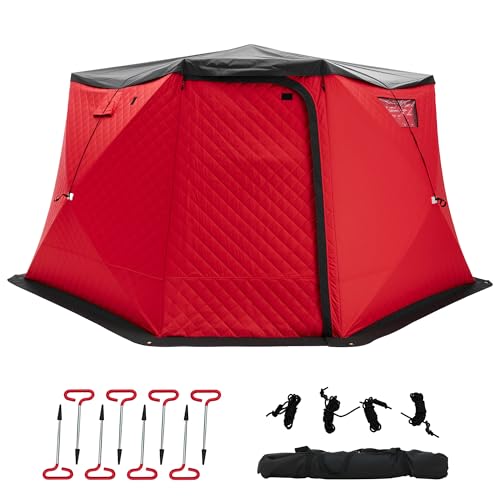
The Albott insulated pop-up ice fishing tent is designed for anglers who want a large shelter with several useful winter details. It lists a capacity of six to eight people and uses three-layer Oxford fabric for added coverage. The package includes a rain cover, chimney vent, anchors, ropes, and a carry bag. Those included parts can make the shelter more useful across changing winter conditions.
The chimney vent is especially helpful for users who plan to manage heat with a compatible stove, but safe installation remains essential. I would keep the vent clear, follow the heater maker’s rules, and use a carbon monoxide alarm inside any heated shelter. The roomy interior should work well for families and group trips. Its broad design also means buyers should plan where to place it before opening it on a crowded lake.
Pros:
- Large capacity for six to eight people
- Three-layer Oxford fabric adds protection
- Includes a rain cover for wet conditions
- Chimney vent supports compatible stove use
- Anchors, ropes, and carry bag are included
- Good layout for family fishing days
Cons:
- Heater and stove use require strict safety care
- Large footprint may limit placement choices
- Extra accessories can add setup time
What Makes the Best Ice Fishing Shelter?
The best ice fishing shelter is not always the largest or most expensive model. It should match the number of anglers, the type of lake access, and the weather you expect. A solo angler may value low weight and a fast setup more than a huge floor plan. A family may need headroom, easy doors, and space for warm clothing and snacks.
I also look at the shelter as a full system. Fabric, frame, anchors, doors, windows, vents, and packed size all affect the real experience. One weak part can spoil an otherwise good day. A warm wall does not help much if wind lifts the shelter, and a large floor does not help if the bag is too hard to carry.
Insulation and Heat Retention
Insulation is one of the first features to check when shopping for an ice fishing shanty. Insulated walls can slow heat loss and help reduce the chill from wind. They may also make a heater work less hard, though no shelter can replace safe clothing and proper cold-weather planning. Thin material may weigh less, but it usually offers less comfort in severe conditions.
Look for terms such as insulated, thermal, or multilayer fabric. These labels tell you the design goal, but they do not guarantee a specific temperature inside. Door seals, window covers, floor gaps, and wind all matter. I prefer a shelter that balances insulation with enough vents to manage moisture and fresh air.
Size and Fishable Area
Manufacturers often list both sleeping or standing capacity and fishable area. These numbers are not always the same in real use. A shelter rated for six people may fit six seated anglers, but it may not hold six anglers plus chairs, tackle bags, heaters, coolers, and drilled holes with ease.
For comfort, I usually suggest choosing one size above the exact number in your group. A four-person shelter can be pleasant for two anglers. A six-person shelter may be ideal for four people with gear. More room lets you spread out rods and reduces the risk of stepping on line, bait, or electronics.
Pop-Up Hub Frame
A hub-style shelter uses connected support arms that open like an umbrella. This design lets anglers set up a large tent in a short time. It also folds into a carry bag without the long loose poles found in some frame shelters. The tradeoff is that large hub shelters can still require strength and care during the first opening.
Cold hands make every task harder. A simple frame can save energy and reduce the time you stand in the wind. Before your first trip, practice opening the shelter at home. Learn where the hubs lock, how the windows close, and where the anchors attach.
Anchoring in Winter Wind
Anchors are not optional for a large ice fishing tent. Even a calm lake can develop strong gusts, and a broad shelter can catch wind like a kite. Place anchors evenly around the shelter and tighten the ropes without pulling the walls out of shape. Check them again after a weather change or when the fabric begins to flap.
Follow local rules for ice anchors and avoid damaging the ice surface. On hard ice, use the anchor system recommended by the shelter maker. Never assume the shelter is safe just because it feels heavy. A partner can help hold the frame while you secure each corner.
Doors and Trip Hazards
A good door should open smoothly and close tightly. It should not force you to step over a high flap while carrying fishing gear. This is why a no-trip door, such as the feature listed on the Eskimo Outbreak 450XDP and 850XDP, can be more useful than it first appears.
Door placement also affects the layout inside. Check whether the entry path crosses your main fishing holes. Leave a clear route from the door to the heater and other equipment. A little planning can prevent falls and protect rods from getting crushed.
Windows, Vents, and Moisture
Windows let in light and help you watch the lake without opening the door. Vents let stale air and moisture escape. Both features matter because warm breath and melted snow can create condensation inside a cold shelter. Wet walls can make clothing and gear feel damp by the end of the day.
Keep vents open enough for fresh air, especially when using a fuel-burning heater. The United States Consumer Product Safety Commission warns that carbon monoxide can build up quickly in enclosed spaces. Use only equipment approved for the setting, keep a working carbon monoxide alarm nearby, and follow every heater instruction.
Heater Safety Inside an Ice Shelter
Never treat an ice fishing shelter as a sealed room. A propane heater or stove can produce carbon monoxide, an odorless and dangerous gas. The National Weather Service and other safety agencies recommend proper ventilation and carbon monoxide awareness in enclosed areas. I also recommend carrying a battery-powered carbon monoxide detector and checking its batteries before each trip.
Keep the heater away from fabric, coats, fuel, and loose gear. Use a stable surface and follow the required clearance around the unit. Never leave a running heater unattended. If anyone feels dizzy, weak, confused, or sick, shut off the fuel source, leave the shelter, and seek fresh air at once.
Portability and Packed Size
A large shelter can be wonderful once it is open but difficult before that point. Check the packed dimensions, carry handles, and listed weight. Think about the full route from your vehicle to the fishing area. Deep snow, rough ice, and slush can make a short walk feel long.
For vehicle-based fishing, a large model such as the Eskimo Outbreak 850XDP may make sense. For a long trek, a smaller shelter may be the smarter choice. If you fish with a partner, split the load when the design allows it. A shelter should improve the trip, not drain all your energy before the first hole.
Fabric Strength and Weather Protection
Three-layer fabric and heavier denier material can provide a stronger barrier against wind and winter wear. Still, fabric weight is only one part of durability. Seams, zippers, frame joints, window covers, and anchor points also deserve attention. A shelter that folds while wet may develop odor or mildew if you store it too soon.
Dry the shelter fully after each trip. Brush off ice before folding it, and avoid forcing frozen fabric into a tight bag. Store it in a dry area away from heat and sharp objects. Basic care can protect the investment for many seasons.
How I Compare Ice Fishing Shelters
I compare each shelter by looking at useful space, setup, insulation, access, included gear, and transport needs. I also consider the gap between the listed capacity and comfortable capacity. This matters because anglers rarely bring only a rod. They bring seats, bait, augers, tip-ups, gloves, food, and safety gear.
I do not rank a shelter on size alone. A smaller model may win for a mobile angler, while a large model may win for a group that stays in one spot. The best ice fishing shelter should fit your habits. It should also give you a safe place to warm up without creating new risks.
Best Shelter Size for One Angler
A solo angler often needs less floor area but more organization. A medium shelter can hold a chair, heater, tackle, and a few holes without feeling empty. A large shelter may offer comfort, but it also takes longer to carry and anchor. If you move often to find fish, mobility should lead the decision.
Keep your gear near the walls and leave a clear path by the door. Use small bins instead of loose bags. A tidy shelter feels warmer because you spend less time searching for tools with cold fingers.
Best Shelter Size for Families
Families need more than fishable floor space. They need room for extra layers, snacks, drinks, games, and safe movement. A low threshold and easy door can help children enter and exit without falling. Windows can also make the shelter feel brighter and less closed in.
I would choose a shelter rated above the number of people who will attend. That extra room acts like a cushion. It helps when the weather turns poor and everyone wants to sit inside at once.
Best Shelter for Large Groups
Large groups should focus on interior flow. The Eskimo Outbreak 650XD, Garvee, and Eskimo Outbreak 850XDP offer the space needed for several anglers. The 850XDP is the most group-focused choice because its listed capacity reaches seven to nine people. The 650XD may provide a better balance when the group is closer to five people.
Large shelters need a team approach. One person can open the frame while another secures the anchors. Set the shelter where the door will not face the strongest wind. Keep all exits clear, and do not fill every open area with gear.
My Recommendation
The Eskimo Outbreak 650XD is my best all-around pick for many group anglers because it combines a large 94-square-foot fishable area with a five-to-seven-person capacity. It gives a group room to fish, move, and store gear without reaching the extreme size of the 850XDP. The ActiveTrail is a strong choice for buyers who want a tall, roomy shelter for six to eight people. Its included anchors, bag, and vents add practical value.
For a smaller group, the VEVOR 4-6 Person shelter offers a useful balance of floor space and portability. The Eskimo Outbreak 450XDP stands out for pairs or small families that value its no-trip door. The Garvee and Albott models suit larger family trips, while the Eskimo Outbreak 850XDP is best for a big group that wants maximum room. Prices and availability can change, so check the current Amazon listing before ordering.
| Best for | Why |
|---|---|
| Large fishing groups | Eskimo Outbreak 850XDP offers the most listed capacity and floor room. |
| Best overall group balance | Eskimo Outbreak 650XD provides 94 square feet for five to seven people. |
| Small groups and families | VEVOR offers useful space, quick setup, and included anchors at a practical size. |
Tips for Using an Ice Fishing Shelter
Choose a flat area before you open the tent. Remove loose snow from the setup zone and check the ice around your fishing holes. Keep the shelter away from cracks, pressure ridges, and unsafe ice. The Minnesota Department of Natural Resources and other state agencies stress that ice thickness can change across one lake, so never judge safety by appearance alone.
Carry a spud bar, ice picks, a throw rope, and a personal flotation device when conditions call for them. Tell someone where you plan to fish and when you expect to return. A warm shelter cannot make unsafe ice safe. Treat shelter comfort and ice safety as two separate jobs.
Use a small mat or foam pad under your feet. It reduces contact with cold ice and gives your boots a place to dry. Keep spare gloves in a sealed bag. Cold hands can turn a simple knot or zipper into a frustrating task.
Plan the hole layout before setting down chairs and tackle. Leave space between holes and avoid placing gear where people must walk. If you use a heater, place it where it cannot tip into a hole or brush against the wall. These small steps create a calmer and safer fishing space.
Common Buying Mistakes to Avoid
One common mistake is buying by the people rating alone. Capacity labels often describe how many people can fit, not how many can fish in comfort. If your group brings lots of gear, choose a larger size. If you hike long distances, choose a smaller shelter that you can carry without strain.
Another mistake is ignoring wind. A shelter may feel solid in the yard but act differently on open ice. Use all supplied anchors and ropes. Do not leave a large tent unsecured while you drill holes or move gear.
Some buyers also forget to check the door design. A high step can become a trip hazard when snow covers the floor. A no-trip entry can make a real difference for children, older anglers, and anyone carrying a heavy auger.
Finally, do not assume insulation removes the need for ventilation. Warm, damp air can create condensation, and fuel-burning heaters can create carbon monoxide. Open vents as directed, use a detector, and follow the appliance manual every time.
FAQs Of Best Ice Fishing Shelter
What is the best ice fishing shelter for a large group?
The Eskimo Outbreak 850XDP is the largest option here, with a listed capacity of seven to nine people. The Eskimo Outbreak 650XD is a better fit for groups closer to five or six anglers.
Is an insulated ice fishing tent worth it?
Yes. Insulated walls can reduce drafts and help hold warmth. They may improve comfort during long trips, but you still need safe clothing, proper ventilation, and a suitable heater.
How many people fit comfortably in an ice shelter?
Comfort depends on chairs, holes, heaters, and gear. In most cases, plan for fewer people than the maximum rating. A shelter rated for six may feel best with four anglers and their equipment.
Can I use a propane heater inside an ice fishing shelter?
Use only a heater approved for the setting and follow its instructions. Keep vents open, maintain clear space around the unit, and carry a carbon monoxide alarm. Never leave a running heater unattended.
How do I keep an ice fishing shelter from blowing away?
Use every anchor point and rope supplied with the shelter. Secure the corners evenly and check them when the wind changes. Large shelters need extra care because their broad walls catch more wind.
Final Verdict: Which Should You Buy?
The Eskimo Outbreak 650XD is my top overall pick because it offers excellent room, insulation, and group comfort without the extreme footprint of the biggest model. For smaller groups, choose the VEVOR or Outbreak 450XDP.
The best ice fishing shelter is the one that matches your group, gear, travel distance, and weather. Check current Amazon pricing, packed size, and stock before your next safe trip.