
Are Fire Pits Allowed on Patios
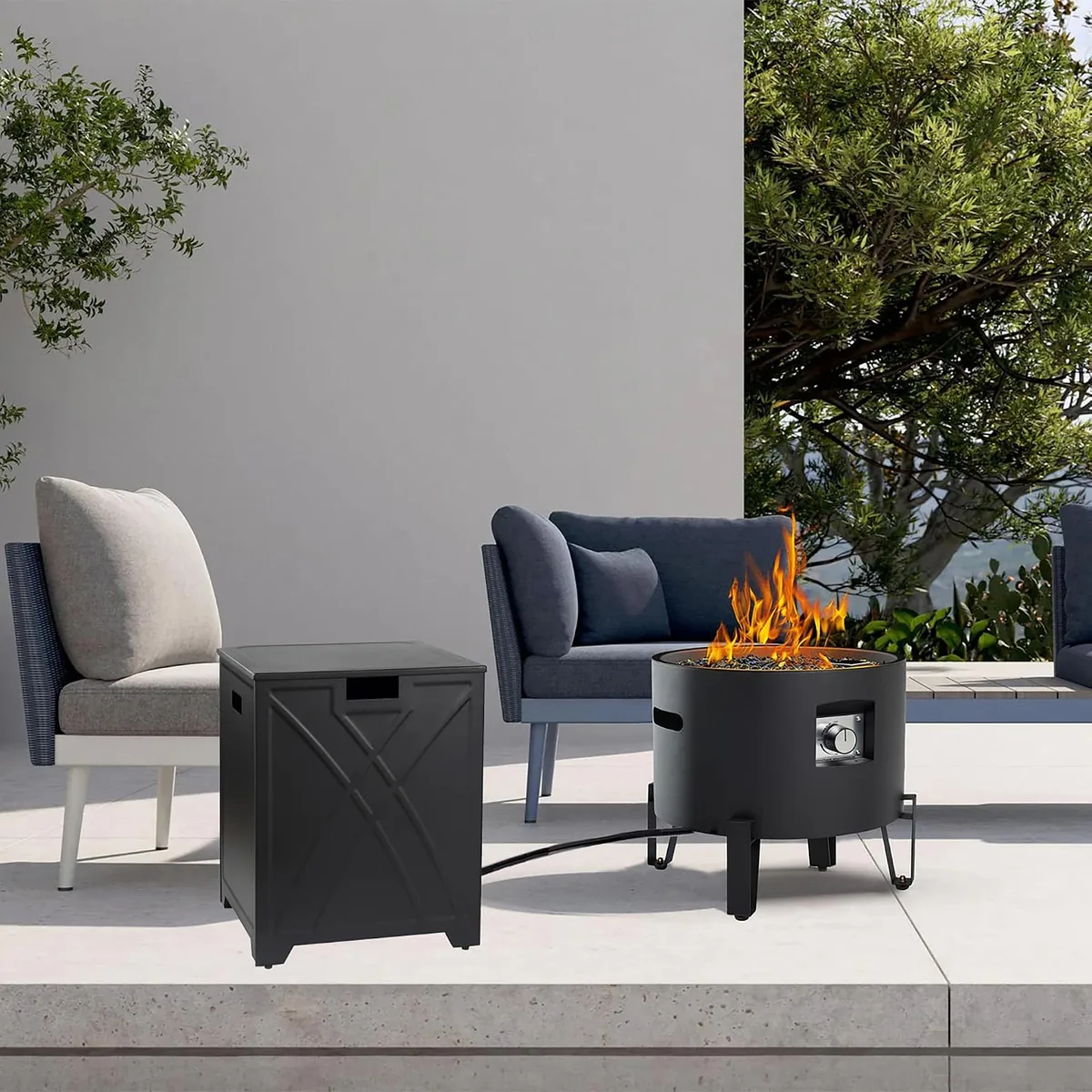
Image source: Bing (Web (fair-use with source credit))
The Short Answer: Yes, No, or Maybe — Here's What Decides
The short answer is maybe. Fire pits are allowed on patios only under certain conditions. Local codes, HOA rules, and patio material all matter.
Gas units often face fewer restrictions than wood-burning ones. Concrete and stone patios are safer than wood decks. Always verify before buying or building.
First, Check Your Local Rules and HOA (Don't Skip This)
Your local fire code is the first and most important gatekeeper. Many cities and counties adopt the National Fire Protection Association standards or their own fire prevention code. These codes typically specify:
- Minimum clearance from structures (often 10 feet for gas, 15 feet for wood)
- Prohibited fuel types (some areas ban wood-burning entirely)
- Burn bans during drought or high fire danger
- Permit requirements for built-in units
If you live in a neighborhood with a homeowners association, your HOA covenants may be even stricter than the city code. Some HOAs ban fire pits on patios outright. Others allow only propane units or restrict hours of use.
Check your HOA's CCRs (Covenants, Conditions, and Restrictions) before you buy anything.
Call your local fire department's non-emergency line. They can tell you the specific rules for your address. This one phone call can save you a costly citation or a dangerous mistake.
If you're looking for a model that already meets common safety standards, these patio-ready options are worth a look. Many of the best-rated fire pits for concrete patios include built-in heat shields and automatic shutoff valves that satisfy most local codes.
Second, Look at Your Patio Material and Clearances
Your patio surface determines what kind of fire pit you can safely use. Concrete, stone, brick, and gravel are the safest surfaces. They handle high heat without damage.
Wood decks, composite decks, and rooftop patios need extra precautions.
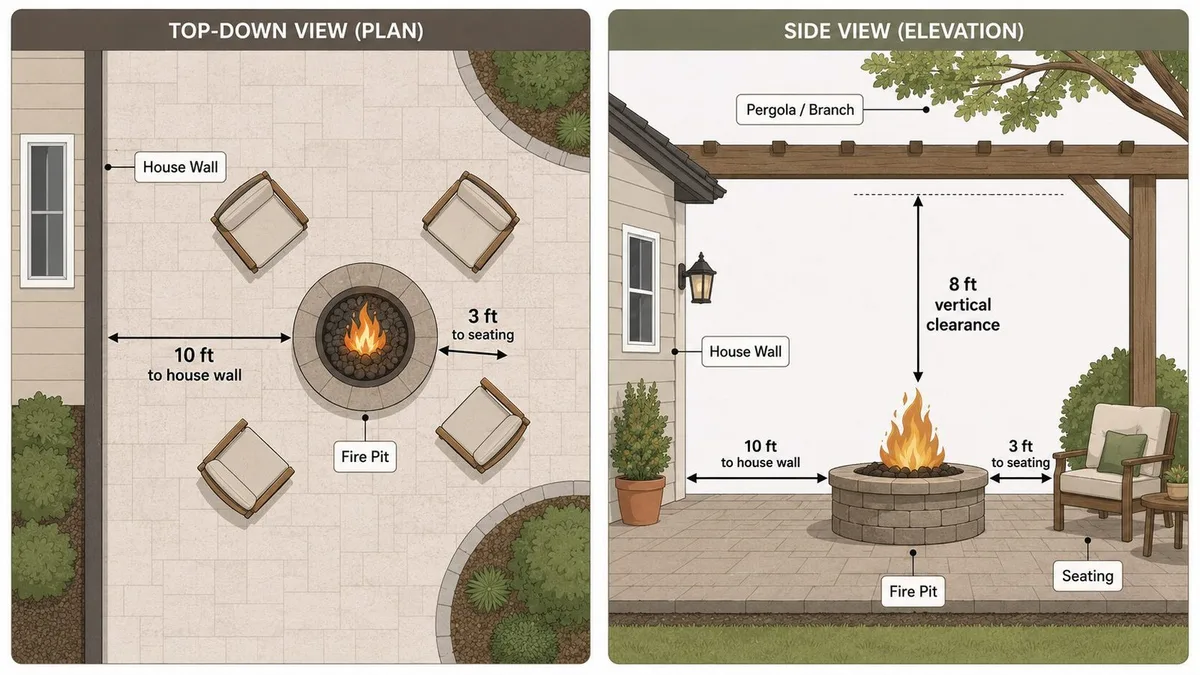
Image source: Bing (Web (fair-use with source credit))
Here's a quick reference for patio materials:
| Patio Surface | Safe for Wood Fire Pit? | Safe for Gas Fire Pit? | Extra Precautions Needed |
|---|---|---|---|
| Concrete | Yes | Yes | Use a fire pit mat to prevent staining |
| Stone / Paver | Yes | Yes | Level the base; avoid flaking stones |
| Brick | Yes | Yes | Monitor for cracking over time |
| Gravel | Yes, with base | Yes | Add a fire pit mat for ember control |
| Wood Deck | Usually not recommended | Yes, with heat shield | Use a fire pit mat and keep 3+ ft clearance |
| Composite Deck | Risky | Yes, with caution | Composite melts at lower temperatures |
| Rooftop | Check building code | Only small propane units | Requires fireproof barrier and weight limits |
Clearance rules are just as important. Standard recommendations include:
- 10 feet from any structure (house, shed, fence)
- 3 feet from anything flammable (furniture, plants, decorations)
- 10 feet from property lines
- 15 feet from dry vegetation
If your patio is small, these distances may be impossible to meet. In that case, a portable propane fire pit with a small footprint might be your only option. Many of the best-rated compact fire pits for decks are designed to fit tight spaces while still meeting clearance guidelines.
Third, Pick the Right Fire Pit Type for Your Setup
Once you know your rules and your patio surface, choose a fire pit type that matches. Here are the three main options and how they work on a patio.
Propane Fire Pits
These are the most patio-friendly. They produce no smoke, no sparks, and no ash. They also have a lower flame height, which reduces heat damage to your patio.
Most propane models come with a built-in heat shield and a UL listing for safety.
- Best for wood decks, composite decks, and small patios
- Easy to move if you need to store it during a burn ban
- Propane tank must be stored at least 10 feet from the house
Natural Gas Fire Pits
These connect directly to your home's gas line. They never run out of fuel. But they require professional installation and a permit.
A natural gas line needs to be run to your patio, which adds cost and commitment.
- Best for concrete or stone patios where you want a permanent fixture
- Usually allowed by HOAs because there's no smoke
- Must be installed by a licensed plumber
Wood-Burning Fire Pits
These are the most restricted. They produce smoke, embers, and ash. Many cities ban them on patios, especially in urban areas with tight lot lines.
Even where allowed, you need a spark screen and a fire pit mat.
- Best for large concrete or stone patios with plenty of clearance
- Often banned in HOAs and wildfire-prone areas
- Not recommended for wood decks or composite decks
If you're unsure which fuel type fits your situation, compare models that are known for easy maintenance and safe operation. Many of the top-rated fire pits with electronic ignition include safety features that satisfy strict local codes.
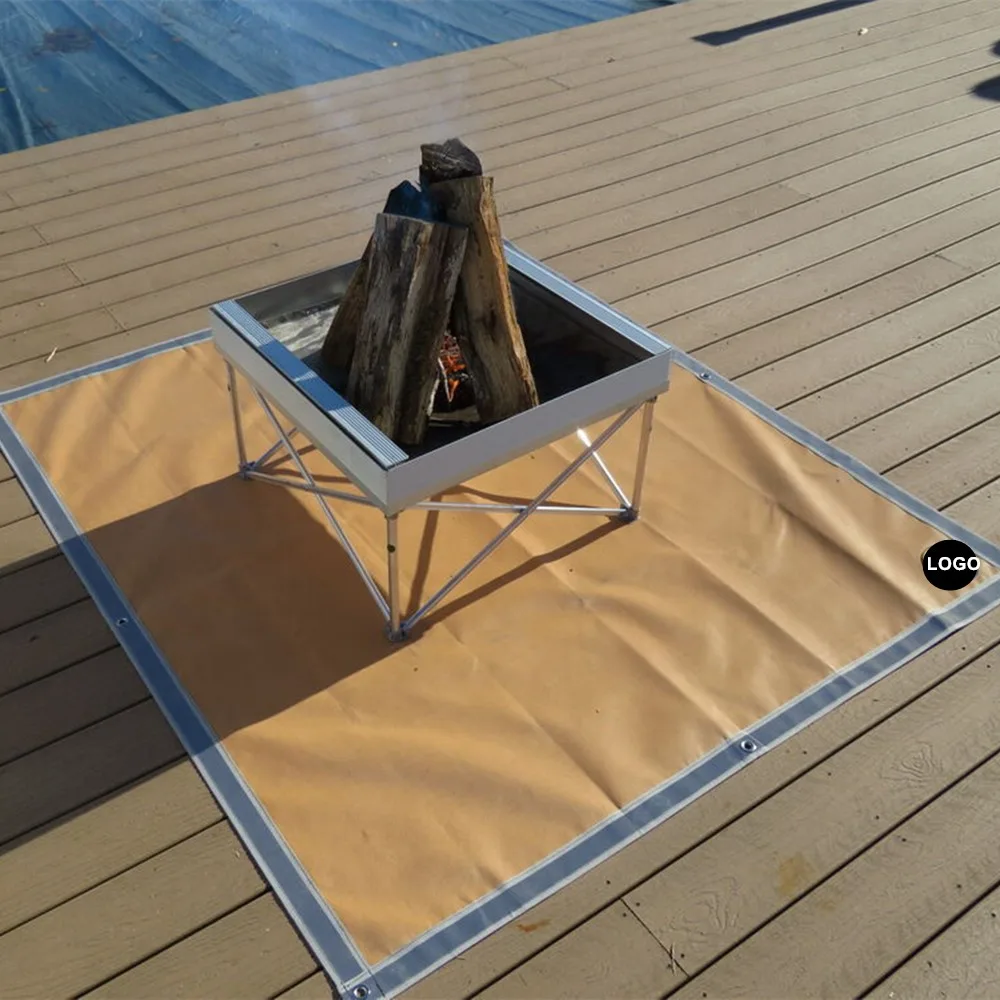
Image source: Bing (Web (fair-use with source credit))
Your Personal Decision Tree: A Simple Checklist
Here's a step-by-step checklist you can follow to get your own answer. Print it or save it on your phone.
- Call your local fire department, Ask about fire pit regulations, burn bans, and permit requirements.
- Check your HOA rules, If you have an HOA, read the CCRs or ask the board.
- Measure your patio, Note the distance to your house, fence, property line, and any vegetation.
- Check your patio material, If it's wood or composite, you likely need a gas unit with a heat shield.
- Choose a fuel type, Match it to your rules, patio size, and surface. Gas is usually the safest bet.
- Buy a fire pit mat, Even on concrete, a mat protects the surface and catches embers.
- Check your insurance policy, Some homeowner's policies exclude fire pit damage. Call your agent.
- Test the setup, Before your first real fire, do a dry run. Check the clearance distances again.
If you can answer "yes" to all these checks, you're good to go. If any one of them says "no" or "maybe", stop and resolve it first.
For a budget-friendly option that fits most patio setups, consider one of the best-reviewed fire pits under $300. They're small enough to move, safe enough for most surfaces, and they meet the basic clearance and safety standards.
3 Common Mistakes That Will Get You in Trouble
Mistake 1: Assuming Your HOA Allows It Because the City Does
This is the most common mistake we see. People check the city code, find nothing that bans fire pits, and buy one. Then they get a letter from the HOA a week later.
HOAs can enforce rules that are stricter than local fire codes. They can ban fire pits entirely even if the city allows them. They can restrict hours, fuel types, or locations.
The city has no say in HOA rules.
Always check your HOA covenants before you buy anything. If you don't have a copy, ask your HOA board or property manager. A quick email now saves you a headache later.
Mistake 2: Putting a Wood-Burning Fire Pit on a Wood Deck
Wood decks and wood-burning fire pits are a dangerous combination. Embers escape. Heat radiates through the base.
A single spark can smolder for hours before igniting.
Even with a fire pit mat, wood decks are risky. Many local codes actually ban wood-burning fire pits on wood decks. Composite decks are even worse.
They can melt or warp at lower temperatures.
If you have a wood or composite deck, stick with a propane fire pit. Make sure it has a heat shield and a fire pit mat underneath. And keep at least 3 feet of clearance on all sides.
Many of the best-rated fire pits for decks include these safety features.
Mistake 3: Forgetting to Check for Burn Bans
Burn bans can pop up overnight. A dry spell, high winds, or a regional fire danger warning can trigger one. If you light a fire during a burn ban, you risk a fine that can range from 100 to 1000 dollars or more.
Burn bans are usually announced by your local fire department or air quality management district. Some areas have a text alert system you can sign up for. Others post updates on their website or social media.
Check before you light every single time. Even if you used your fire pit yesterday, the rules can change today. A quick search for your city name plus "burn ban" takes 10 seconds and saves you a lot of money.
Frequently Asked Questions
Can I use a fire pit on a balcony?
Most apartment and condo balconies do not allow fire pits. Building codes and fire codes typically ban open flames on balconies above ground level. Propane tanks are also restricted in many buildings due to fire codes.
Check with your building manager first.
Do I need a permit for a fire pit on my patio?
Portable fire pits usually do not require a permit. Built-in fire pits and natural gas lines almost always do. If you are installing a permanent gas line, you need a licensed plumber and a permit from your city building department.
Call your local building office to confirm.
Can I use a propane fire pit on a wood deck?
Yes, with precautions. Use a propane fire pit with a heat shield. Place a fire pit mat under the unit.
Keep at least 3 feet of clearance from deck railings, furniture, and plants. Never leave it unattended. Propane produces no embers, which makes it safer than wood on a deck.
How far should a fire pit be from the house?
The NFPA recommends at least 10 feet from any structure. Some local codes require 15 feet for wood-burning units. Check your own city's rules.
If your patio is smaller than 10 feet from the house, a fire pit may not be allowed. A portable propane unit with a smaller flame might be the only option.
What happens if my neighbor complains about smoke?
If you are following local codes and HOA rules, smoke complaints are usually a civil matter. But if your area has a nuisance smoke ordinance, the city can cite you. Wood-burning fire pits produce the most smoke.
Consider a low-smoke model or a propane unit to keep the peace. Many of the best low-smoke fire pits are designed to minimize neighbor complaints.
Are smokeless fire pits safer for patios?
Smokeless fire pits reduce smoke and airborne embers, which makes them safer for patios. But they still produce heat and require the same clearances. They are not a magic solution for tight spaces.
You still need a fire pit mat, proper clearance, and compliance with local codes.