
Are Propane Fire Pits Safe
Are propane fire pits safe? The short answer is yes, but only when you use them correctly. Most people buy propane fire pits thinking they're completely foolproof.
The reality is a little more complicated.
Per the National Fire Protection Association, propane fire pits fall under ANSI standard Z21.97 for outdoor decorative gas appliances. That standard exists because the risks are real. The key to staying safe starts with understanding exactly what's happening inside that burner.
Quick Answer
Yes, propane fire pits are safe when used correctly. The biggest risks are carbon monoxide poisoning and gas leaks. Both are preventable with proper setup and basic precautions.
Follow the manufacturer's clearance rules. Never use them indoors or in an enclosed space. That covers the vast majority of incidents.
Image source: Bing (Web (fair-use with source credit))
The One Question Everyone Asks First
The nuance comes down to setup and environment. A propane fire pit on an open patio is very different from one under a covered porch. The wind matters.
The condition of your hose matters. The type of tank you use matters. Get those things right, and the risk drops to near zero.
Get them wrong, and you're playing with fire literally.
Most safety incidents happen because people skip one basic step. They don't do a leak test. They place it too close to the house.
They leave it on overnight. In our research, the vast majority of reported problems trace back to user error, not faulty equipment. That's good news, because it means you can control the outcome.
If you're looking for a reliable model for a patio, you'll want to see our recommendations for different setups and surfaces. The key is matching the unit to your space, not the other way around.
To understand why, it helps to know how these things actually work.
How Propane Fire Pits Actually Work
The basic physics of gas, air, and flame
Propane comes out of the tank as a liquid under pressure. The regulator converts it to a gas and drops the pressure to a safe level. That gas flows through the hose to the burner.
The burner mixes it with air in the right ratio. When you hit the igniter, you get a clean, controlled flame.
The whole system is designed to be simple. There's a thermocouple near the burner. This is a safety device that senses the flame.
If the flame goes out, the thermocouple cools down and shuts off the gas. That's your first line of defense against a gas leak.
What "clean burning" really means for safety
Clean burning means the propane is fully combusted. When the air-to-gas ratio is right, you get carbon dioxide and water vapor. Nothing else.
No soot, no smoke, no flying embers.
But when the mixture is wrong, you get carbon monoxide. That's the real danger. A dirty burner, a clogged air intake, or a faulty regulator can throw off the balance.
Clean burning requires a clean system. Models with a push-button ignition add convenience, but they don't fix a dirty burner.
Here's a quick breakdown of the key components and their safety roles:
| Component | Function | Safety Role |
|---|---|---|
| Propane tank | Stores liquid propane | Must be upright, has OPD valve |
| Regulator | Controls gas pressure | Prevents overpressure |
| Hose | Carries gas to burner | Must be crack-free |
| Burner | Mixes gas with air | Proper flame pattern |
| Thermocouple | Senses flame | Shuts off gas if flame dies |
The Hard Truths About Carbon Monoxide and Explosion Risks
CO poisoning is real, and it's not just indoors
Carbon monoxide is odorless, colorless, and deadly. The misconception is that it only builds up indoors. That's wrong.
On a calm day, under a covered patio or a low overhang, CO can accumulate to dangerous levels. The National Fire Protection Association warns against using any propane appliance in a semi-enclosed space.
Symptoms start at 50 parts per million. You get a headache, dizziness, nausea. At 200 ppm, you're in trouble.
At 400 ppm, it's life-threatening. The solution is simple: keep it in the open air. At least 10 feet from the house, and never under a roof or awning.
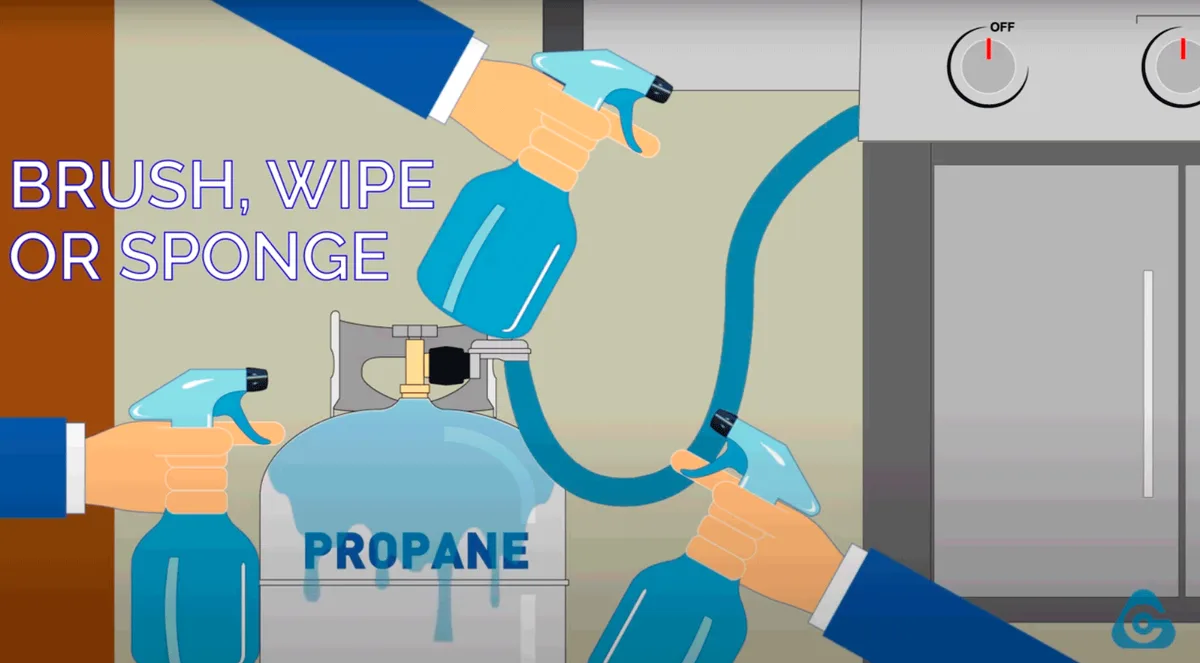
Image source: Bing (Web (fair-use with source credit))
Gas leaks, hose failures, and what happens when something goes wrong
Propane has a smell added to it. It's called mercaptan, and it smells like rotten eggs. If you smell that, you have a leak.
The only reliable way to find it is the soapy water test. Apply a soapy solution to every connection. If you see bubbles, you have a leak.
Tighten the connection or replace the part.
A leaking hose can cause an explosion. It doesn't even need a flame. A spark from static electricity or a nearby appliance can ignite the gas.
That's why you check before every single use. Not just the first time.
Why lava rock explosions happen and how to avoid them
Lava rock is porous. It traps moisture. When you heat that trapped water, it turns to steam and expands.
The rock can shatter and send hot fragments flying. It's rare, but it happens.
The fix is easy. Use dry lava rock. Or better yet, switch to fire glass.
Fire glass is non-porous. It doesn't trap moisture. It also looks cleaner and lasts longer.
If you're looking for a safer alternative, there are models designed specifically for use with glass rocks.
The 5-Step Safety Check Before You Light Your First Fire
This is the checklist. Do it every time. Not just the first time.
| Step | Action | Why It Matters |
|---|---|---|
| 1 | Place at least 10 ft from house, 3 ft from combustibles | Prevents fire spread |
| 2 | Apply soapy water to all connections | Detects gas leaks |
| 3 | Hand-tighten the tank connection | Overtightening damages the seal |
| 4 | Open gas, light immediately | Avoids gas buildup |
| 5 | Close tank valve, then burner knob | Clears gas from the line |
1. Location, location, location
Your fire pit should be on a flat, non-combustible surface. At least 10 feet from the house, 3 feet from anything flammable, and 6 feet below any overhead structure. If you're using it on a wooden deck, you need a heat shield or a mat.
There are specific models designed for use on wooden decks. They have wider bases and heat protection.
2. The soapy water leak test
Mix a little dish soap with water. Apply it to the tank connection, the hose fittings, and the regulator. Turn on the gas.
If you see bubbles, you have a leak. Tighten the connection or replace the part. Do not use the pit until it's fixed.
3. Tank connection 101
Hand-tighten the tank connection. That's it. Do not use a wrench.
Overtightening can damage the seal and cause a leak. The rubber gasket does the work. Hand-tight is enough.
4. The ignition sequence
Turn on the gas at the tank. Then immediately light the burner. Do not let the gas flow for more than a few seconds before lighting.
If it doesn't light on the first try, turn off the gas and wait a minute. Then try again. This clears any accumulated gas.
5. The shutdown procedure
Close the valve on the tank first. Then turn the burner knob to off. This clears the gas from the hose.
If you do it in reverse, gas stays in the line and can leak out slowly.
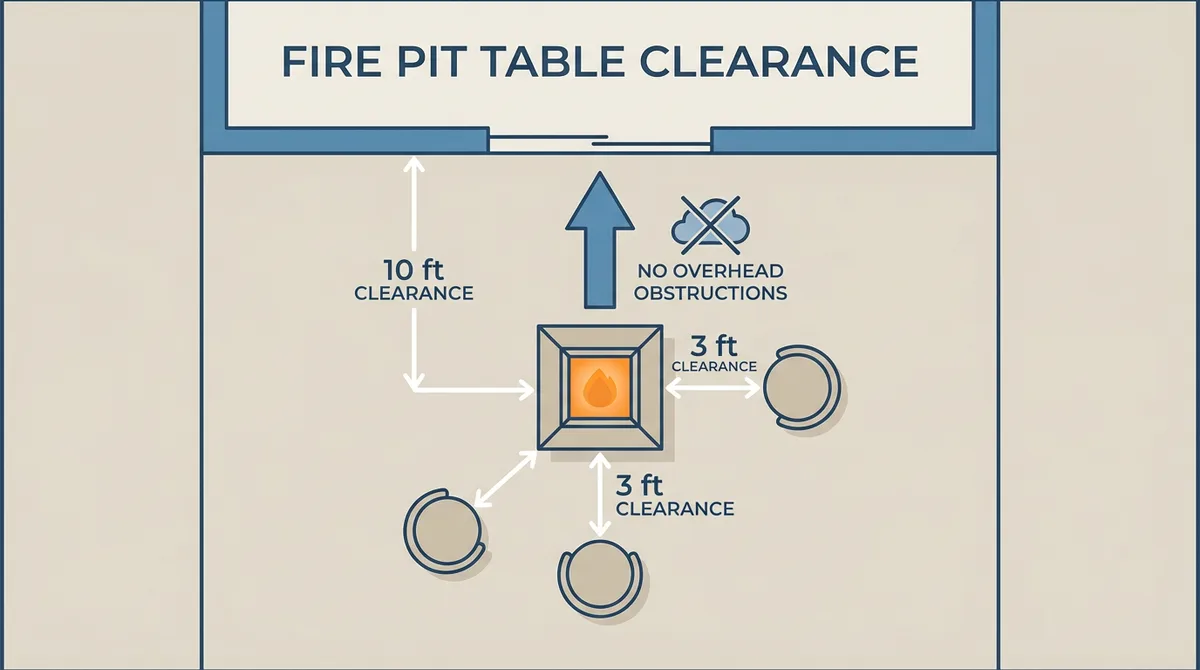
Image source: Bing (Web (fair-use with source credit))
Common Mistakes People Make That Get Them Into Trouble
Using it under a covered patio or garage
This is the most common mistake. People think the sides are open, so it's fine. It's not.
The ceiling traps the CO. It can build up to dangerous levels in minutes. Even if the sides are open, the gas doesn't disperse fast enough.
The Propane Education and Research Council says outdoor use means completely open to the sky.
Leaving the gas on after a wind blowout
Wind blows out the flame. The gas keeps flowing. Without a thermocouple, you have a gas leak.
Models with a thermocouple shut off the gas automatically. If yours doesn't have one, you need to watch it constantly. Never leave it unattended.
Storing tanks indoors
Propane tanks must be stored outside. They must be upright and away from heat sources. If the tank leaks, the gas can accumulate in a garage or shed.
One spark, and you have an explosion. Store them in a shaded area, preferably with a cover.
Ignoring rust, corrosion, and old hoses
A cracked hose is a leak waiting to happen. Inspect it before every use. Look for cracks, dry rot, or corrosion.
If the hose is more than five years old, replace it. The regulator should also be checked. Regular upkeep extends the life of your unit and keeps you safe.
Top Safety Questions Answered
Can I use a propane fire pit on a wooden deck?
Yes, but you need to take precautions. Place a heat shield or fire-resistant mat under the unit. Make sure the pit has at least 6 inches of clearance underneath for airflow.
Keep it at least 10 feet from the house and 3 feet from any railings or furniture. There are models designed specifically for deck use that have wider bases and better heat deflection.
Is it safe to leave it burning overnight?
No. Never leave a propane fire pit burning unattended. Wind can blow out the flame.
Animals or children can knock it over. The thermocouple might fail. If the gas keeps flowing and no one is there to notice, you have a serious hazard.
Set a timer if you want to enjoy it for a specific duration. Turn it off when you go inside.
What happens if the flame goes out but the gas keeps flowing?
This is called a gas accumulation event. Without a thermocouple, the gas keeps coming. It pools around the burner.
One spark from a nearby pilot light, a grill igniter, or even static electricity can ignite it. The result is a fireball. That's why models with a flame failure safety device are strongly recommended.
If yours doesn't have one, watch it constantly.
How far from the house is actually far enough?
Ten feet is the minimum for most manufacturers. Some recommend 15 feet for larger units. Check your specific model's manual.
If you're using it on a deck or near a privacy fence, add extra distance. Heat can warp siding and melt vinyl fencing. The clearance rules are there for a reason.
Are tabletop models safer than ground models?
Not necessarily. Tabletop models are smaller and more stable on a flat surface. But they sit closer to people and flammable objects.
A tablecloth, a napkin, or a sleeve can catch fire easily. Ground models are farther from accidental contact. Both are safe when used correctly.
The difference is in placement and awareness.
What about using it in a garage with the door open?
No. Partial ventilation is not enough. Carbon monoxide can reach dangerous levels even with the garage door wide open.
The gas is heavier than air and settles near the floor. It can spread into the house through the door. The only safe place is completely outdoors, open to the sky on all sides.
The Verdict: Are Propane Fire Pits Safe Enough for You?
When they are genuinely low-risk
Propane fire pits are safe when you follow the basic rules. Keep them outdoors. Do the leak test.
Light them immediately. Never leave them unattended. If you tick those boxes, the risk is very low.
The clean burn means no sparks, no embers, and no smoke. That makes them safer than wood fires in many ways.
For families with kids or pets, propane is a solid choice. The lack of flying embers means fewer burn risks. The controlled flame means you can turn it off instantly.
The adjustable heat gives you control over the temperature. As of 2026, the market offers more safety features than ever before, including automatic shutoff valves and electronic ignition systems.
The one situation where you should absolutely not use one
If you cannot follow the clearance rules, do not use a propane fire pit. That means no covered patios, no balconies with low ceilings, no garages, and no tight spaces. If your yard is small and you can't get 10 feet from the house, consider a different option.
A tabletop model might work in a larger open area. But if the space is enclosed, skip it entirely.
A quick decision guide for your specific setup
| Your Setup | Recommendation | Why |
|---|---|---|
| Open patio, 10+ ft from house | Safe with standard precautions | Good airflow, proper clearance |
| Wooden deck | Safe with heat shield and mat | Prevents heat damage and fire |
| Covered porch or awning | Not safe | CO buildup risk |
| Apartment balcony | Only if fully open and 10+ ft from building | Check local fire codes first |
| Small backyard | Use a tabletop model with proper clearance | Smaller flame, less heat output |
| Camping or tailgating | Safe with portable model | Open air, easy to monitor |
The bottom line is straightforward. A propane fire pit is a safe addition to your outdoor space when you respect the equipment and the environment. Skip the shortcuts.
Do the checks. Keep it in the open air. That's the entire formula.







One Comment