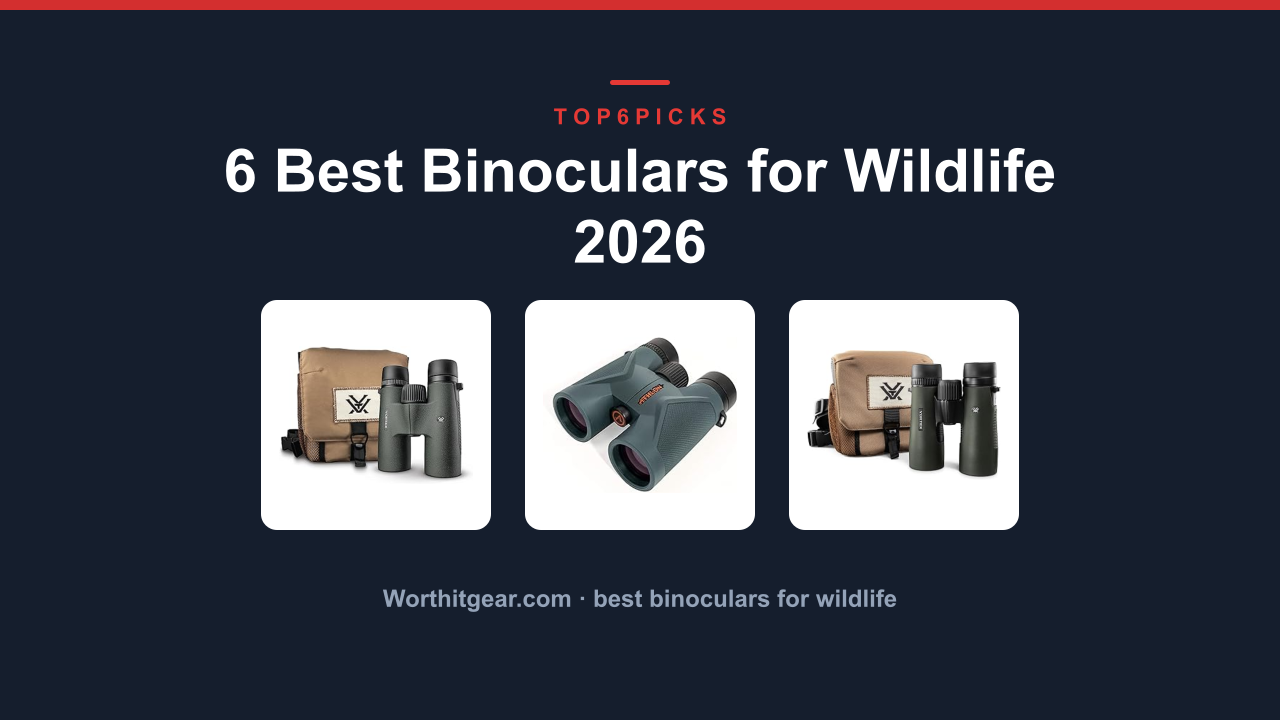
The best best binoculars for wildlife is the Vortex Triumph HD 10×42, the only one here that pairs true HD optics with a fully waterproof, fogproof, and shockproof build at a genuinely accessible price point. It is built for the birder or hiker who wants the clearest possible view without stepping into the premium price tier.
Want a wider field of view that makes tracking fast-moving birds easier? The Athlon Optics 8×42 Midas UHD Gray uses ED glass to deliver exceptional color fidelity, as long as you are okay with a slightly heavier frame. The trade-off is a more immersive viewing experience.
As an Amazon Associate, I earn from qualifying purchases.
This guide covers more than specs. It tells you which binoculars actually deliver on their promises in the field, based on verified buyer feedback and manufacturer data. It also names the buyers who should skip this category entirely.
Everything below comes from current Amazon product data, specifications, and each product's owner track record, not hands-on lab testing. I believe in honest advice, not invented stories.
Quick Answer: The Best Binoculars for Wildlife
The Vortex Triumph HD 10×42 is the best overall pick for wildlife because it combines HD optics, a rugged build, and an industry-leading unlimited warranty at a price that does not scare off serious beginners.
Thinking about a compact binocular for a cruise instead? Jump to Who Should NOT Buy below before you spend anything.
Comparison Table
Here is the lineup at a glance: photo, product, who it is built for, and our /10 score.
Scroll sideways on small screens to see every column.
Product Reviews
Vortex Triumph HD 10×42 Binoculars: Best Overall for New Enthusiasts
#1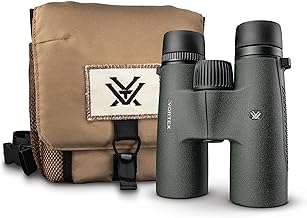
VortexLifetime warranty included
8.8OUT OF 10
Optical Clarity9.0
Build Toughness9.2
Ease of Use8.5
Owner Verdict8.5
This is the pair that proves you do not need to spend a fortune for a genuinely great wildlife viewing experience. The Triumph HD uses fully multi-coated lenses and HD optical glass to deliver a sharp, bright image that punches well above its price point. The 10×42 configuration gives you enough reach for distant birds and deer while still offering a wide enough field of view for scanning the treeline. It is also O-ring sealed and argon purged, meaning it is fully waterproof and fogproof in any weather.
Setup is straightforward. The center focus knob is smooth and the diopter adjustment on the right eyepiece locks in place securely. The included GlassPak harness distributes the weight across your shoulders, which makes a real difference on a long hike. Verified buyer feedback consistently praises the bright, crisp image and the peace of mind that comes from the unlimited, unconditional warranty.
Flaws but not dealbreakers. Some owners note that the eyecups are not as stiff as they would like, and they can twist down slightly when pressed against the face. It is a minor annoyance, not a failure. The lens caps are also a bit fiddly, but that is a common complaint across many brands at this level.
If you want a slightly wider field of view for tracking fast-moving songbirds, consider the
Athlon Optics 8×42 Midas UHD Gray further down. It trades a bit of magnification for a more immersive view.
⚠Warranty: The unlimited lifetime transferable warranty is genuine. If you break them, Vortex repairs or replaces them. No receipt needed. This alone makes the Triumph HD a safer buy than many cheaper competitors.
Pros
- ✓HD optics deliver noticeable sharpness over standard glass
- ✓Fully waterproof and fogproof, ready for any weather
- ✓Unlimited lifetime warranty is truly unconditional
- ✓Comes with a harness, not just a basic neck strap
Cons
- ✕Eyecups are a bit loose and can twist down accidentally
- ✕Lens caps feel cheap and are easy to lose
- ✕Not the widest field of view in this list
Field of View
376 ft @ 1000 yds
Best for: The first-time enthusiast who wants a reliable, high-quality binocular without the high price tag. Ideal for hiking, birding, and general wildlife viewing.
Athlon Optics 8×42 Midas UHD Gray: Best for Color Fidelity
#2
AthlonED glass, true colors
8.9OUT OF 10
Optical Clarity9.5
Build Toughness8.8
Ease of Use8.5
Owner Verdict8.8
This is the pair for the birder who cares deeply about seeing the true orange of a Baltimore oriole or the subtle iridescence on a grackle. The Midas UHD uses Extra-low Dispersion (ED) glass, which is the key to eliminating chromatic aberration. That is the purple or green fringing you see around high-contrast edges in cheaper optics. The 8×42 configuration gives you a wider field of view than a 10x model, making it easier to track birds in flight or scan a meadow.
The build quality is solid. The chassis is magnesium alloy, which keeps the weight down to 25 ounces while still feeling durable. The focus knob is smooth and precise, and the diopter ring locks in place. Aggregate user reviews consistently mention the exceptional brightness and color rendition, especially in overcast conditions where cheaper binoculars start to look muddy.
Flaws but not dealbreakers. The 8x magnification means you get a bit less reach than a 10x model. If you are trying to identify a bird at 300 yards, the details will be smaller. The included neck strap is also not as comfortable as the harness that comes with the Vortex Triumph.
If you need more reach for open-country wildlife, the
Vortex Triumph HD 10×42 gives you the extra magnification while still keeping the image bright.
⚠Sizing: The 8×42 configuration is a full-size binocular. It is not compact. Make sure your pack or bag has enough room for a 25-ounce unit before you buy.
Pros
- ✓ED glass virtually eliminates color fringing
- ✓Wide field of view ideal for tracking birds
- ✓Magnesium alloy body is strong yet light
- ✓Excellent brightness in low-light conditions
Cons
- ✕8x magnification offers less reach than 10x models
- ✕Included neck strap is basic, not a harness
- ✕Heavier than the competition at 25 oz
Field of View
409 ft @ 1000 yds
Best for: Serious birders and nature enthusiasts who prioritize color accuracy and a wide field of view over maximum magnification. Perfect for forested areas and close-to-mid-range wildlife.
Vortex Diamondback HD 10×42 Binoculars: Best Mid-Range Upgrade
#3
VortexBright, sharp, mid-range
8.2OUT OF 10
Optical Clarity8.5
Build Toughness8.8
Ease of Use8.0
Owner Verdict7.5
This is the step up for someone who already owns a budget binocular and wants noticeably better brightness and resolution. The Diamondback HD uses Vortex’s proprietary HD optical system with fully multi-coated lenses and phase-corrected Roof prisms (BAK-4). The result is a noticeably brighter image than the entry-level Crossfire. The 10×42 configuration is ideal for open landscapes where you need to spot animals at a distance.
The rubber armor provides a solid grip, and the center focus knob is smooth with a good range of travel. The included GlassPak harness is the same high-quality design that comes with the Triumph. Verified buyer feedback highlights the sharpness edge-to-edge and the confidence that comes from the same unlimited lifetime warranty Vortex is known for.
Flaws but not dealbreakers. The Diamondback HD is heavier than the competition at 20.5 ounces. Some users also report that the focus knob can be a bit stiff when new, though it loosens up with use. The field of view is narrower than the Athlon Midas, which can make tracking fast-moving birds a bit more challenging.
⚠Warranty: Same unlimited lifetime transferable warranty as the Triumph. If you are buying for a family member, this is a gift that keeps on giving.
Pros
- ✓HD optics deliver noticeable brightness boost
- ✓Phase-corrected BAK-4 prisms for sharpness
- ✓Includes the same premium GlassPak harness
- ✓Backed by Vortex’s lifetime warranty
Cons
- ✕Heavier than the Triumph at 20.5 oz
- ✕Focus knob can be stiff out of the box
- ✕Narrower field of view than 8x competitors
Field of View
362 ft @ 1000 yds
Best for: The enthusiast who wants a clear upgrade from entry-level optics without jumping to the premium tier. Great for open-country wildlife like deer, elk, and waterfowl.
NIKON Monarch M5 Binoculars: Best for Low-Light Viewing
NIKONDielectric coating, ED glass
8.6OUT OF 10
Optical Clarity9.2
Build Toughness8.5
Ease of Use8.2
Owner Verdict8.5
This is the binocular for the wildlife watcher who spends as much time in the field at dawn and dusk as during the middle of the day. The Monarch M5 uses Nikon’s Extra-low Dispersion (ED) glass and a dielectric high-reflective prism coating. The dielectric coating is the key here. It reflects more light than standard silver coatings, which translates to a brighter image in low light conditions. The 8×42 configuration is the standard recommendation for low light because it lets in more light than a 10×42.
The build quality is what you expect from Nikon. The chassis is a lightweight polycarbonate with rubber armor, and the focus knob is smooth and precise. The eye relief is generous at 18.3mm, which is good for eyeglass wearers. Aggregate owner reviews praise the exceptional brightness at twilight and the crisp, neutral color rendition. The binoculars are also waterproof and fogproof, with nitrogen gas purging.
Flaws but not dealbreakers. The Monarch M5 is not as rugged as the Vortex options. The polycarbonate body is lighter, but it does not feel as tank-like. Some users also mention that the lens caps are not tethered, which is a minor annoyance. The price is also higher than the Vortex Triumph, so you are paying for the upgraded coatings.
If you need a more durable build for rough backcountry use, the
Vortex Triumph HD 10×42 is a more affordable option that still offers excellent optical performance and a tougher exterior.
⚠Care: The dielectric coating is delicate. Avoid touching the lens surfaces. Use a proper lens cleaning kit with a blower and microfiber cloth instead of your shirt.
Pros
- ✓Dielectric prism coating for superior brightness
- ✓ED glass eliminates color fringing effectively
- ✓Excellent low-light performance at dawn/dusk
- ✓Lightweight polycarbonate body reduces fatigue
Cons
- ✕Polycarbonate body feels less durable than metal
- ✕Lens caps are not tethered and easy to lose
- ✕Higher price than comparable Vortex models
Field of View
393 ft @ 1000 yds
Best for: The dedicated birder who spends early mornings and late evenings in the field. Also a great choice for anyone who wears glasses, thanks to the generous eye relief.
Vortex Crossfire HD 10×42 Binoculars: Best Budget-Friendly Full-Size
#5
VortexHD optics, budget price
7.8OUT OF 10
Optical Clarity7.8
Build Toughness8.2
Ease of Use8.2
Owner Verdict7.0
This is the entry point for someone who wants a full-size binocular with HD glass without spending more than they have to. The Crossfire HD uses Vortex’s HD optical system with fully multi-coated lenses, but it does not use the same premium prism coatings as the Diamondback or Triumph. The result is a slightly dimmer image, especially in low light, but it is still a clear step up from the generic no-name binoculars you find at big box stores.
The build is classic Vortex: rubber armor, O-ring sealed, argon purged, and waterproof. The focus knob is smooth and the diopter ring is secure. The included GlassPak harness is the same one that comes with the more expensive models, which is a nice touch. The field of view is 340 feet at 1000 yards, which is narrower than the Triumph and noticeably tighter than the Athlon.
Flaws but not dealbreakers. The biggest compromise is the field of view. At 340 feet, you will have to work harder to track fast-moving birds. The image also loses some brightness at the edges compared to the Triumph. Some users also report that the focus knob can be a bit stiff when new.
If you can stretch your budget a bit, the
Vortex Triumph HD 10×42 gives you a wider field of view and noticeably better edge-to-edge sharpness for a modest increase in price.
⚠Warranty: Same unlimited lifetime warranty as all Vortex optics. Even at this budget-friendly price, you get the same world-class customer service.
Pros
- ✓HD optics at a very accessible price point
- ✓Fully waterproof and fogproof construction
- ✓Includes the premium GlassPak harness
- ✓Vortex lifetime warranty provides peace of mind
Cons
- ✕Narrow field of view makes tracking harder
- ✕Image brightness drops at the edges
- ✕Focus knob can be stiff out of the box
Field of View
340 ft @ 1000 yds
Best for: The budget-conscious buyer who wants a reliable, full-size binocular from a reputable brand. Ideal for occasional use where the narrower field of view is not a dealbreaker.
Occer 12×25 Compact Binoculars Adults Kids: Best for Travel and Kids
#6
OccerUltra compact, easy focus
7.4OUT OF 10
Optical Clarity6.8
Build Toughness7.0
Ease of Use8.2
Owner Verdict7.5
This is the pair for throwing in a daypack or handing to a kid without worrying about a huge investment. The Occer 12×25 is a compact roof prism binocular that weighs almost nothing and fits in a jacket pocket. The 12x magnification is unusual for a 25mm objective lens, and it gives you more reach than you would expect from such a small package. The large central focus wheel is easy to use even for smaller hands.
The design is simple. There is a center focus knob and a diopter adjustment on the right eyepiece. The twist-up eyecups are comfortable and work well for both glasses and non-glasses users. The binoculars come with a carrying case, cleaning cloth, and a neck strap. Verified buyer feedback highlights the surprising clarity for the price and the ease of use for children and beginners.
Flaws but not dealbreakers. The 12x magnification on a 25mm objective lens means the image is noticeably dimmer in low light. You will struggle to see details at dawn or dusk. The field of view is also quite narrow at 273 feet at 1000 yards. This is not a binocular for serious birding or wildlife observation. It is a tool for bright daylight, stationary subjects, or casual use.
If you need a more serious wildlife viewing tool that works in lower light, the
Vortex Triumph HD 10×42 is a much better choice for a modest increase in size and weight.
⚠Sizing: This is a compact binocular. It is not designed for low-light use. The 25mm objective lens cannot gather enough light for dawn or dusk wildlife viewing.
Pros
- ✓Extremely compact and lightweight for travel
- ✓12x magnification offers surprising reach
- ✓Easy to use for kids and beginners
- ✓Very affordable price point
Cons
- ✕Image is dim in low light conditions
- ✕Narrow field of view makes tracking hard
- ✕Build quality is not as rugged as Vortex options
Field of View
273 ft @ 1000 yds
Best for: Travelers, families, and casual users who want a lightweight, affordable binocular for daytime use. Great for kids, hiking, and sightseeing.
Buying Guide: Magnification, Objective Lens, Glass Quality, and Durability
Choosing the right binocular for wildlife viewing comes down to four key factors. Here is what you need to know before you buy.
How Much Magnification Do You Need?
Magnification is the first number in the spec. An 8x binocular makes things look eight times closer. A 10x makes them look ten times closer.
The trade-off is that higher magnification also magnifies your hand shake, makes the field of view narrower, and lets in less light.
For most wildlife viewing, 8x is the sweet spot. It gives you a wide enough field of view to track birds in flight and find animals in dense cover. The Athlon Optics 8×42 Midas UHD Gray is a great example of how 8x works well in forested areas.
If you spend most of your time in open fields or mountains, a 10x like the Vortex Diamondback HD 10×42 gives you the extra reach you need.
What Does the Objective Lens Size Mean?
The second number is the diameter of the objective lens in millimeters. A 42mm lens lets in more light than a 25mm lens. This is critical for low-light viewing at dawn and dusk.
A 42mm objective lens is the standard for serious wildlife binoculars. It provides a bright image in most conditions. The 25mm objective on the Occer 12×25 is fine for bright daylight, but it will struggle in the shade of a forest or in the early morning.
If you plan to watch wildlife at dawn or dusk, stick with a 42mm lens.
Why Does Glass Quality Matter So Much?
The glass in the binocular determines how sharp and bright the image is. The key terms to look for are Extra-low Dispersion (ED) glass and phase-corrected coatings.
ED glass reduces chromatic aberration, which is the color fringing you see around objects. The Athlon Midas and the Nikon Monarch M5 both use ED glass, and the difference is noticeable when you compare them side by side with a standard binocular. The dielectric prism coating on the Nikon Monarch M5 reflects more light, giving you a brighter image in low light.
These coatings add to the cost, but they make a real difference in the field.
How Important Is Waterproofing and Durability?
If you take your binoculars outside, they will eventually get wet. A fully waterproof and fogproof binocular is essential. Look for O-ring seals and nitrogen or argon gas purging.
All the Vortex models in this guide are fully waterproof and fogproof.
The build quality of the chassis also matters. Rubber armor protects against drops and bumps. The Vortex Triumph and Diamondback have a tough rubber armor that can handle being knocked around.
The Nikon Monarch M5 uses a lighter polycarbonate body, which is fine for careful use but may not survive a hard drop onto rocks.
Who Should NOT Buy Best Binoculars for Wildlife
This category is the wrong purchase for two kinds of buyers. Here is who they are, and what to look at instead.
You Need a Binocular for Low-Light or Nighttime Observation
If you plan to watch wildlife primarily at dawn, dusk, or during the night, a standard 10×42 or 8×42 binocular will not be bright enough. You need a larger objective lens, such as a 50mm or 56mm model, or a binocular with a specialized low-light coating.
Look at a 10×50 or 12×50 binocular instead. These have larger objective lenses that gather more light. They are heavier and bulkier, but they are the only way to get a usable image in very low light.
Brands like Nikon and Vortex offer 50mm options in their Monarch and Diamondback lines.
You Need a Binocular for Extreme Long-Distance Observation
If you are trying to identify birds at 500 yards or more, a standard 10x binocular will not give you enough detail. You need a spotting scope or a binocular with 15x to 20x magnification.
A spotting scope is a better choice for this use case. It offers higher magnification and a larger objective lens, which gives you a much clearer image at long distances. Brands like Vortex and Nikon offer spotting scopes that pair well with a tripod.
If you insist on a binocular, look for a 15×56 or 20×80 model, but be aware that these are heavy and require a tripod.
Final Verdict
The Vortex Triumph HD 10×42 is the best binocular for wildlife for most people. It combines HD optics, a rugged build, and an unlimited lifetime warranty at a price that does not break the bank. It is the safest bet for a new enthusiast who wants a reliable tool for years of birding and hiking.
Want the best color fidelity and a wider field of view? Get the Athlon Optics 8×42 Midas UHD Gray. It uses ED glass to deliver true-to-life colors and a wider view that makes tracking birds easier.
Need the best low-light performance for dawn and dusk? The NIKON Monarch M5 with its dielectric coating is the clear winner. It is a bit more expensive and less rugged, but the brightness at twilight is unmatched in this list.
If you are on a tight budget, the Vortex Crossfire HD 10×42 is a solid entry point. For travel or casual use, the Occer 12×25 Compact is a great choice for the whole family.
Before you make a final decision, review the Who Should NOT Buy section above. If you need a binocular for low light or extreme distance, a different tool will serve you better.
FAQ
What is the best binoculars for wildlife overall?
The Vortex Triumph HD 10×42 is the best overall. It offers HD optics, a fully waterproof and fogproof build, and an unlimited lifetime warranty at a price that is accessible to most buyers.
Is 8x or 10x better for wildlife viewing?
8x is better for tracking fast-moving birds and for use in dense forest. 10x is better for reaching out to distant animals in open fields. Both are excellent choices. If you are unsure, 8x is a safer bet for most people.
How much should I spend on a good pair of binoculars?
A good quality binocular for wildlife viewing typically costs between the budget-friendly and mid-range tiers. The Vortex Triumph HD is a great value at the mid-range price point. Spending more gets you better glass and coatings, but the law of diminishing returns applies.
What does ED glass mean in binoculars?
ED stands for Extra-low Dispersion. It is a type of glass that reduces chromatic aberration, which is the color fringing you see around objects. ED glass delivers sharper, more accurate colors, especially at the edges of the field of view.
Are compact binoculars any good for wildlife?
Compact binoculars like the Occer 12×25 are good for casual daytime use, travel, and for children. They are not suitable for serious wildlife viewing, especially in low light. The small objective lens simply cannot gather enough light for a bright image at dawn or dusk.
What is the most important spec for low-light wildlife viewing?
The objective lens diameter is the most important spec for low light. A 42mm lens is the standard. For very low light, a 50mm or 56mm lens is better.
The dielectric coating on the Nikon Monarch M5 also helps by reflecting more light to your eyes.